


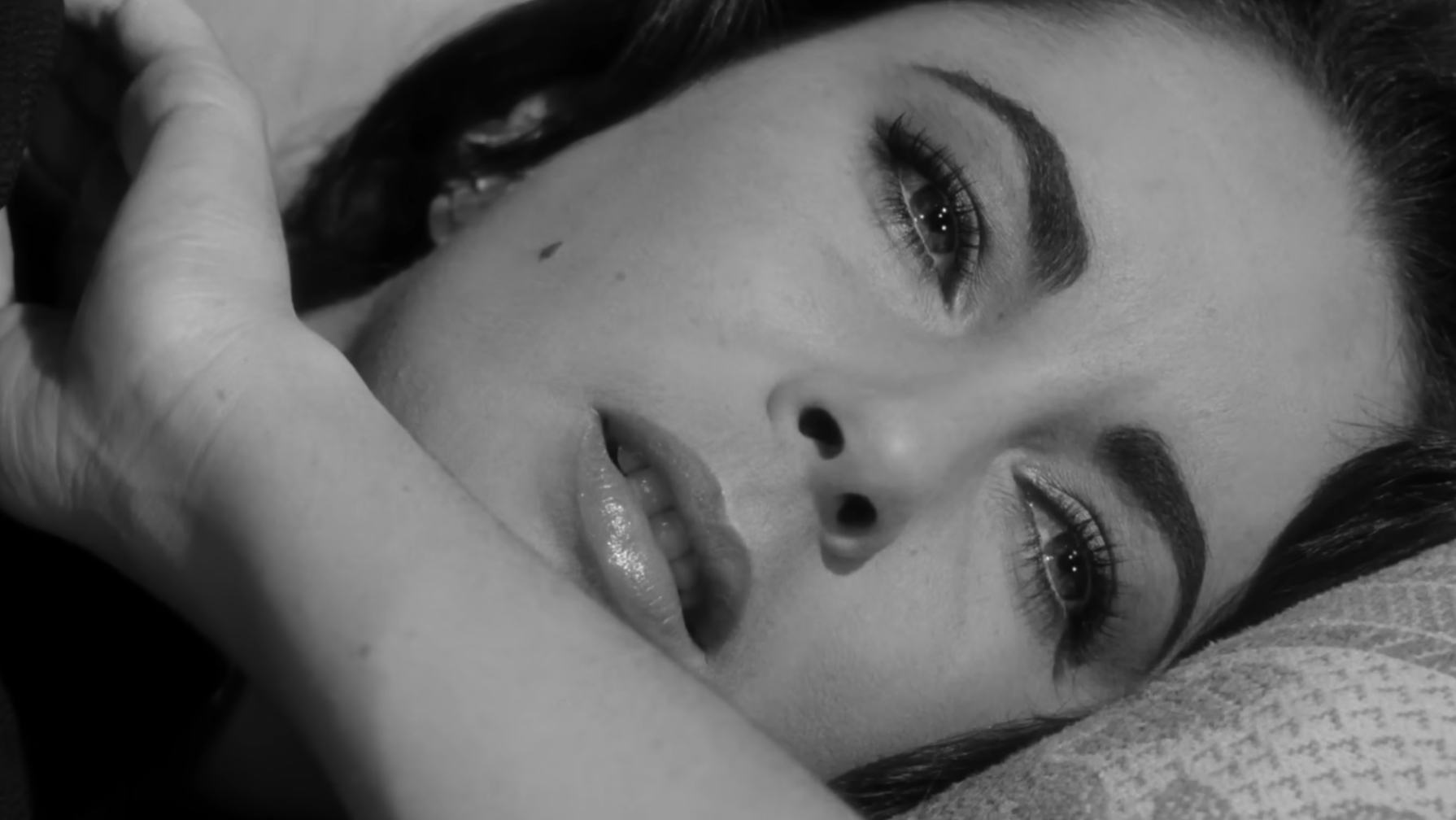
In falsely fancying herself as an Elizabeth Taylor type (at least in spirit if not in looks), perhaps it was inevitable that Taylor Swift (whose own name likely makes her feel she has an even “deeper” connection to the icon of the silver screen) would write a song centered around her sooner or later. After all, she already dug up Clara Bow’s corpse for a track on The Tortured Poets Department, so why not move to another decade in Hollywood’s history to home in on a different iconic actress “of a certain era”? But maybe one should just be grateful that she didn’t try to bring Marilyn Monroe into it, even if that’s who it sounds like she’s referring to when she says, “Be my NY when Hollywood hates me.”
Anyway, unlike Clara Bow, (E.) Taylor was able to transcend multiple decades as a star. Granted, Bow might have been able to do the same if she didn’t have something of a nervous breakdown right as silent film transitioned into the “talkies” as the 1930s began. As for (E.) Taylor, her career spanned over fifty years (if one chooses to count her final role in The Flinstones, which of course they should). And in those later years, she became almost as known for her perfume and AIDS awareness advocacy as she was for her films. Of course, Swift wouldn’t see fit to overly highlight this aspect of (E.) Taylor’s life (though she is sure to bandy the phrase “white diamonds”), even though it was arguably the most meaningful one—the perfume and the AIDS awareness advocacy.
Because even the perfume empire signaled something greater about (E.) Taylor’s resiliency in the face of years of personal struggle, not least of which was her struggle with an addiction to alcohol and pain killers starting in the late 1960s. Being able to turn all of that around with a highly successful line of fragrances (that ultimately paved the way for the many celebrities after her that would lend their name to a perfume) was what made the CEO of Elizabeth Arden at the time, Joseph Ronchetti, comment on how her ability to bounce back in the face of numerous personal struggles is what made her so relatable to the public.
But instead, Swift chooses to focus on other aspects of (E.) Taylor’s life, desiring to align her narrative with Swift’s own when it comes to the number of men that have come and gone in their love life. And this is precisely why the video for “Elizabeth Taylor”—which amounts to a “best of”-type clip show of her films—is edited in such a way as to depict (E.) Taylor in a manner that is lovelorn, chaotic and raging. All in service of lyrics that speak to (E.) Taylor’s tumultuous love life. Though as Swift already underscored in another song of hers (specifically, “…Ready For It?” with the lyrics, “We’ll move to an island, and/And he can be my jailer, Burton to this Taylor”), it was Richard Burton who was deemed (E.) Taylor’s “great love.” So “great,” in fact, that she married him twice (meaning she had seven husbands and eight marriages). Though one doesn’t imagine Swift to be capable of such recklessness, especially since everyone knows that part of what’s taking her so long to marry Travis Kelce is to ensure that the prenup is absolutely ironclad.
Indeed, a key element of what makes “Elizabeth Taylor” so ersatz is Swift’s faux conviction that she’s some kind of victim of love when (E.) Taylor never viewed herself that way, ostensibly taking a bite out love and romance every time it came her way (or she, er, came toward it). Even so, Swift does what she can to make “the connection” happen, even speaking at times from (E.) Taylor’s perspective when she sings a verse like, “That view of Portofino was on my mind when you called me at the Plaza Athénée/Ooh, oftentimes it doesn’t feel so glamorous to be me.”
In another instance, Swift sings, “What could you possibly get for the girl that has everything?” A lyric that references Taylor’s 1953 movie, The Girl Who Had Everything. But, of course, also a reference to Swift theoretically having everything because she’s a billionaire. And the only thing missing from her life being reliable dick that doesn’t “wither” under the spotlight. In fact, “wither” is the word she uses when explaining, “All the right guys/Promised they’d stay/Under bright lights/They withered away.” Then Swift has the audacity to essentially liken Richard Burton to Travis Kelce by adding, “But you bloom.”
As the chorus, “I’d cry my eyes violet, Elizabeth Taylor/Tell me for real/Do you think it’s forever?,” “thunders” over the Max Martin and Shellback-produced bassline, Swift’s intent is to create the same sense of drama that an (E.) Taylor onscreen performance does. Instead, the effect is hollow. And as for invoking the actress’ name, on the one hand, it sounds as if she’s addressing her like God in asking this question. On the other, it also sounds like she’s randomly tacking it onto the front of the verse to remind that the actress, too, often wondered the same thing but still took a leap of faith on getting married—eight times.
Maybe that’s part of why Swift commented of the actress, “Role models are pretty hard to come by, but I would absolutely say that she’s one of mine.” Of course, Swift is totally full of shit, as she looks up to absolutely no one. Especially not now (see also: the way she treated Celine Dion when accepting the Grammy for Album of the Year at the 2024 ceremony). Assuming herself not only “in a class of her own” but in the same league as (E.) Taylor, she’s beginning to cultivate a genre of songs that compare her own “tragic” life to those of the legends that came before her (except that everyone is also well-aware that Swift’s existence has been charmed from the beginning).
This, again, goes back to “Clara Bow,” when she delivers a verse like, “Demanding, ‘More’/Only when your girlish glow/Flickers just so/Do they let you know?/It’s hell on Earth to be heavenly?” Though Swift does her best to make being “heavenly” look “effortless,” never exhibiting the kind of emotion and “volatility” that (E.) Taylor did. Instead, she’s more known for her “cool” aura in the face of public scrutiny, never revealing even the slightest hint of “crumbling” under the pressure. In fact, it’s almost as if she thrives on it at this point. (E.) Taylor kind of did too, spinning scandals into greater box office success (as was the case when she infamously “stole” Eddie Fisher from Debbie Reynolds).
And, talking of that success, for the “Elizabeth Taylor” video, Swift (and, no doubt, her team) pulled scenes from A Place in the Sun, a documentary called Around the World of Mike Todd, Boom!, Cat on a Hot Tin Roof, Cleopatra, Father of the Bride, Giant, Julia Misbehaves, Love Is Better Than Ever, Rhapsody, Suddenly, Last Summer, Who’s Afraid of Virginia Woolf? and plenty of archival footage. All serving Swift’s aim to weave a tapestry that perfectly reflects her song. Her story. And her take on (E.) Taylor’s whirlwind of a life.
What’s more, since Swift isn’t exactly known for not getting what she wants (which is why the latest lawsuit against her probably won’t amount to anything for Maren Wade), the estate of (E.) Taylor granted her permission to use the actress’ image throughout the video, which, in a rare and almost stunning move, doesn’t include Swift anywhere in it. Not even, at one point, donning a black wig and trying to do her own (E.) Taylor drag. Better still for Swift, she was given glowing praise about the song from one of (E.) Taylor’s grandchildren, Quinn Tivey, who assured, “My family loves the song, and grandma would have loved it, too. I wish she could have heard it.”
However, perhaps if (E.) Taylor was still alive to hear it, like Kim Novak commenting on Sydney Sweeney’s casting, one doesn’t imagine she would find much affinity with Swift’s casting of herself as some kind of modern version of (E.) Taylor just because of her “sordid” love life. Which isn’t really sordid at all, so much as people get up in arms when women “serial date” as much as they do when she’s discovered to have slept with a lot of men (rather than serial dating). In any case, considering that Swift despises when she’s included in a narrative she never asked to be a part of, it’s a bit of a double standard for her to paint (E.) Taylor in a manner that’s ultimately reductive and only designed to suit her own “dramatic purposes.”


[…] only being available via Apple Music or Spotify (which Swift did with both “Opalite” and “Elizabeth Taylor,” with theories rightfully speculating that doing so improves chart rankings, as YouTube numbers […]