


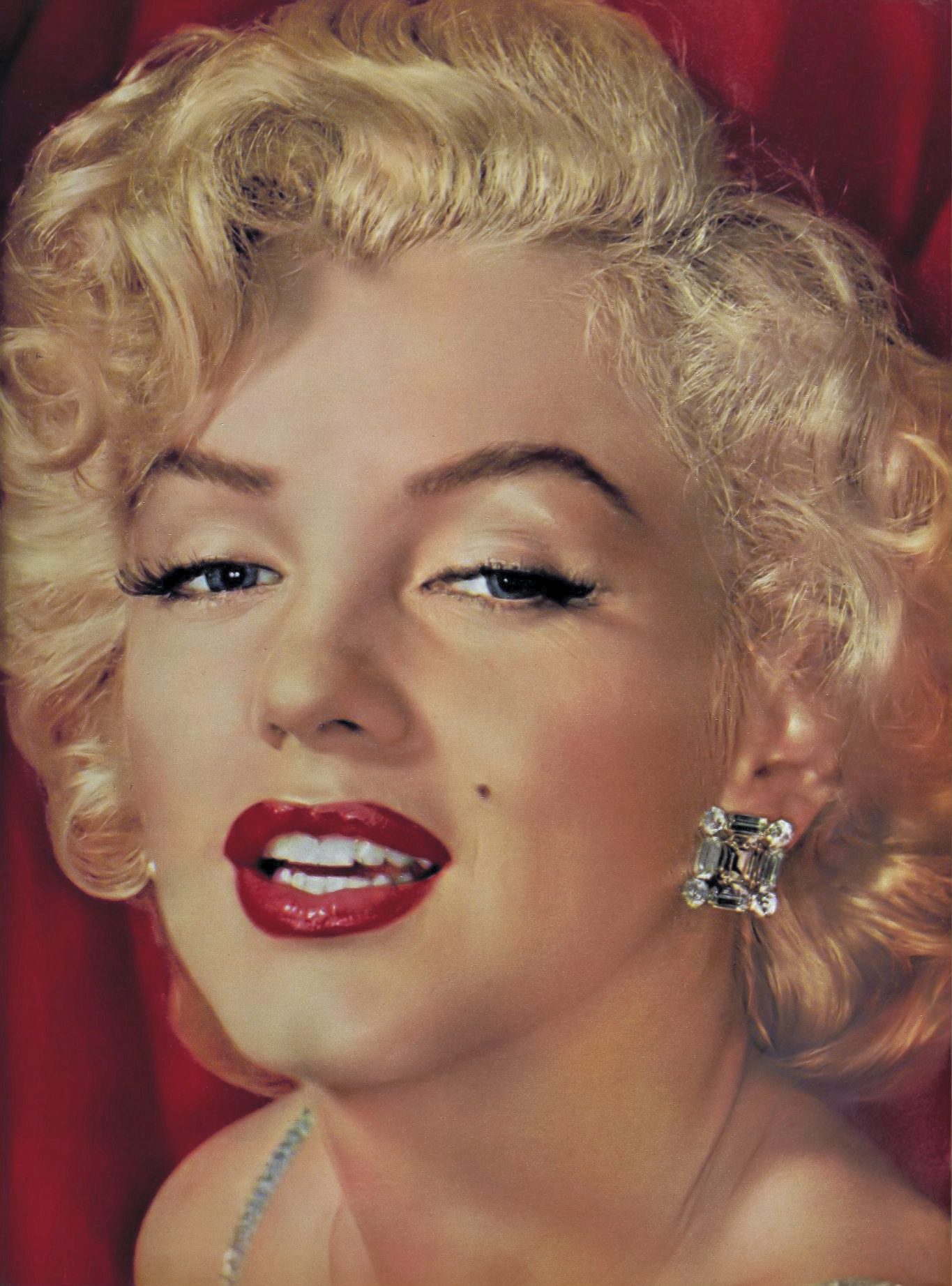
On what would have marked Norma Jeane Baker a.k.a. Marilyn Monroe’s one hundredth birthday, it seems as if the simultaneously maligned (particularly when she was still alive) and celebrated “blonde bombshell” remains as relevant and dissected as ever. Her languid, lascivious glance as studied and “cooed” over as the Mona Lisa. Indeed, wanting to know more about her—the tortured orphan background and the supposed “insatiable appetite” for sex (a myth belied by the fact that she suffered from endometriosis, often making sex feel painful)—is a pastime as “American” as baseball (or racism).
Monroe also helped to establish and cement another beloved American pastime: celebrity denigration. To be sure, Monroe was the blueprint for famous women being picked apart and harshly judged by the media. More to the point, she was the blueprint for a woman leaning into the “dumb blonde” persona everyone projected onto her anyway and using it to her advantage in such a fashion as to both make money and become iconic. Similarly to what Paris Hilton would do about fifty years after Monroe created the “master plan” for how to succeed as a woman when no one would take her seriously (though, to be clear, Hilton is no Monroe—starting with the fact that the former is a classic example of a nepo baby born into wealth and with a “built-in” “brand”).
Rather than trying to convince the public of what they couldn’t ever possibly be convinced of—which was that Monroe was an intelligent person with far more to offer than her measurements—she not only embraced the “dumb blonde” stereotype, but ramped it up to caricature levels (in fact, many aspects of what Monroe was doing can be considered “drag queen”-esque) in a manner that only should have made the public look at themselves and realize how daft they were for buying into it. For genuinely believing in Monroe’s so carefully crafted image because, fundamentally, it said more about how they viewed women. Which is to say, as objects, as playthings, as nitwits. As little more than “eye candy.” But, as Monroe herself once said, “If I’m going to be a symbol of something I’d rather have it be sex than some other things they’ve got symbols of.” Here, too, Monroe reveals, in her subtle manner, how she was a bastion for love, not hate. To that point, it’s easily argued that Monroe was (and is) the modern equivalent of Aphrodite—not just the goddess of love, but also beauty, desire and sexuality.
Monroe served as a totem for all of those things, even as she was also maligned for them in spite of the public “loving” her. And this is where Monroe represented perhaps most of all what modern fame would come to mean—especially for women. For, just as the icons who came after her, including everyone from Carolyn Bessette to Princess Diana to Britney Spears (each of these women also being blonde—which might indicate a certain undeniable prejudice against women with this hair color), Monroe was mercilessly judged and hounded by the press. An entity that, in turn, shaped public opinion about her. So it was that, in her lifetime, she was ultimately painted as some kind of “unhinged slut,” but after her death, she was suddenly a “comedic genius,” no longer relegated solely to being a “sex symbol,” a “dumb blonde” or a “one-note actress.” Never mind that she proved her range many times over, particularly with films like Don’t Bother to Knock, Bus Stop and The Misfits.
Then, of course, there was her “boss,” “independent woman” maneuver of starting her own production company when she got sick and tired of being typecast in one-dimensional roles designed solely to accentuate her physical form. Not what she could do with acting. An art she took so seriously that she donated the bulk of her estate to Lee Strasberg (though that would eventually backfire when his third wife, Anna, sold the intellectual property rights to Authentic Brands in 2011, pimping out Marilyn’s image to an even more “on steroids” degree in the aftermath).
Another cruelly-maligned-for-being-sexual icon, Madonna, picked up on that “phenomenon” during a 1995 interview with Jane Pratt, pointing out, “When Marilyn Monroe was alive, they were so vicious and cruel to her. They ripped her to shreds, they wouldn’t give it up to her in any way, shape or form. And then when she died, it was just like, ‘Oh, she’s a comedic genius.’” Madonna reckoned the same thing would happen to her when she died. And, considering how much her own career has borrowed from Monroe, Madonna likely isn’t off the mark.
Talking of Madonna imitating Marilyn (perhaps still most memorably in the video for 1985’s “Material Girl”), it’s now Sabrina Carpenter imitating Madonna’s imitation of Marilyn (for an ultra “diluted” effect). This being just one of many examples of how Monroe’s image and influence has continued to impact pop culture well into the twenty-first century (hence, her estate-run account on Instagram having twenty million followers). Something that was also further assured by Andy Warhol’s immortalization of her image in his own art immediately after her death in 1962.
But perhaps even more than her image continuing to saturate the culture (which is no small testament to the enduring collective “obsession” with her), Marilyn matters more than ever because she is a reminder of the fact that fame has always chewed women up and spit them out. Treating them as grist for the mill called “public consumption.” Something that says as much about how society treats women in general as it does about how it treats famous ones.
The cycle of putting someone up on a pedestal only to knock the down is as alive and well as ever, even in the current climate of no real “stars” anymore. But the ones that do exist (like, say, Chappell Roan) are sure to be taken down after enough time spent being lauded. And what this indicates, of course, isn’t just that Marilyn established a modern precedent, but that the misogyny of the 1950s has never truly gone away. One need look no further than the current state of politics for additional confirmation of that.


