


Just as last year around the Fourth of July felt like a nadir in U.S. politics (little did they know…), with the election looking to be strongly in the Orange One’s favor after a horrifying first debate between him and Joe Biden, so, too, is this year marked by fresh lows in American politics and morale. Back at the end of June 2024, despite the Orange One having all the intellect of a gnat, he still managed to make Biden look like the lesser presidential choice, with his performance being billed as the “worst performance in the history of televised presidential debates.” As such, a grim outlook settled over the nation as it reckoned with the very real, very strong possibility that, against all odds, the Orange One was going to be back in the White House come 2025. And lo and behold, he was—with the Democrats’ offer of Kamala Harris as a replacement candidate doing nothing to stop him (because, you know, misogyny, racism).
So yes, last Fourth of July wasn’t exactly as “plucky” as usual, save for the release of Kesha’s first single as a truly independent artist, “Joyride.” A weird, wonderful sonic odyssey that found her continuing to experiment with musical styles—something she’s always done in her way, but didn’t really go “balls to the wall” on until 2019’s “Rich, White, Straight, Men,” produced by Stuart Crichton. “Joyride” continues that journey after “Freedom,” Period’s opening track and Kesha’s own according “declaration of independence” (with occasional sonic hints of “TikTok” thrown in for good measure). Commencing with ethereal vocals and soft, uncertain piano notes, there’s almost an Enya-like quality to the song…at first. But, this being Kesha, she’s not one to go without getting the party started right away when it comes to kicking off an album. So it is that, around the two-minute-thirty-five-second mark of “Freedom,” its tone changes entirely, the tempo picking up to showcase a bass-heavy groove that finds Kesha pronouncing, “I only drink when I’m happy and I’m drunk right now/All of you motherfuckers watch out ‘cause your bitch back in town/Baby, I’m free, I am on fire, a fucking dime/God, I feel good, it’s about time.” Would that other American citizens could say the same.
Kesha then taps into something the Orange One himself once said about women (in particular, Lindsay Lohan) by talk-singing, “They said crazy girls are better in bed/Well, I can do one better instead/Take me to that sex shop, bitch/I’m making this song stuck in your head/Maybe this bitch off of her meds/I like it when they all watch/Baby, make the beat drop.” And so it does, with Kesha’s wish being producer Jonathan Wilson’s command as the sonic tone shifts yet again amid the chorus, “Freedom/Oh, I’ve been waiting for you now/Freedom/Oh, I’ve been waiting for you now.” After which Wilson adheres to Kesha’s additional command to “drop it, bitch” by veering the sound toward something more house music-oriented.
Thus, in typical Kesha fashion (especially ever since Gag Order), she takes her listener on quite the trip through musical genres—all in one song. Indeed, “Freedom” is described by Kesha as a “hippie spooky disco” number, and it very much does fit that highly unique description. What’s more, Kesha’s hippie nature (cultivated, in part, thanks to her mother, Pebe Sebert) is turned up on full blast in general lately, with her mentioning during an interview on The Jennifer Hudson Show that, “I live as much as I can on a hippie commune.” If for no other reason than the “clothing optional” cachet.
To be sure, Kesha’s comfortableness with being naked is part of her newfound sense of liberation. Hence, titling her latest tour in promotion of Period the Tits Out Tour. Because, yes, there is no more freeing feeling than having one’s tits out. It’s just that not everyone has the secure sense of self to parade them in public. Kesha, in contrast, makes it very clear she has no problem with nudity, a superpower once again mentioned on Period’s seminal track, “Joyride,” during which she shrugs, “A label whore, but I’m bored of wearing clothes.” Its kooky gay anthem stylings (particularly for L.A. gays who know the distinct joys of driving through West Hollywood with this blasting through their windows) lead into Kesha’s take on “pop-country” (or perhaps what can be better classified as “neo-country”), “Yippee-Ki-Yay.” Yes, a little nod to Bruce Willis in Die Hard.
And what Kesha is dying hard for on this track (and the third single from the record) is a return to her 2010s sensibilities. This even extends to the fact that she made a version of the song with T-Pain (which will perhaps appear on the inevitable deluxe edition of the album…along with, hopefully, “Attention” featuring Slayyyter and Rose Gray). However, to counterpoint her mood of outright joy, Kesha then brings her listeners a defiant mid-tempo ballad called “Delusional” (released as the second single to some controversy due to the AI-generated cover art of the original, before Kesha decided to change it in response to the backlash). Designed as an “eat your heart out”-type number, Kesha rails against the fool who took her for granted and thought she would allow herself to be treated like shit forever by him as she sings, “Baby, you’re delusional/Thinking you could ever find/Something that’s as beautiful/Someone with a love like mine.” Whoever this bloke was, Kesha indicated it was a “small d Sagittarius boy from hell” when she posted a story about the song to her Instagram at the end of November ‘24. But that Sag should have known a water sign (Pisces) like Kesha can always dampen his fire element if and when she wants to.
And yet, there are many times when she doesn’t want to, as indicated on the fuckboy homage that is “Red Flag.” For it’s also just like a Pisces to believe in the adage, “I can fix him” (see also: Olivia Rodrigo). Produced solely by Kesha, the song has an infectious, 80s-inspired rhythm that sardonically complements the confessional lyrics, “I like what I like, the bizarre type, lowlife/Tell me something I don’t know/All the nice guys left me dead inside/I like chaos dripping head to toe.” Indeed, that’s the chorus that Kesha chooses to begin the song with before giving up the first verse, “I’m seeing signs that I can’t ignore/It’s complicated what I’m looking for/You’re fucking crazy and I’m fucking bored, yeah/Exactly what I need/I need a certain kind of chemical/It’s dangerous and unforgettable/I want emotions that are overflowing/Outta control and hopeless.” Considering Kesha’s “lifestyle” (as a pop star), that’s exactly what she’s liable to get whether she wants to or not.
Elsewhere in the standout track, she returns to her “Your Love Is My Drug” voice to talk out the humorous bridge, “I see a red flag walking by, it really does it for me/He doesn’t know me, but he told me that he really loves me/We’re getting married and we’re buying a boat house in Bali/This is a red flag, this is a red flag/I’m trying to level, but the devil’s telling me we’re perfect/You say you don’t believe in miracles, but I can turn you/Can’t see this ending, but I certainly can’t see this working/This is a red flag, this is a red flag.” But oh well, a girl has to take some emotional risks if she wants to find a love that lasts forever. This being the theme of the song that somewhat dichotomously follows “Red Flag,” “Love Forever.”
Serving as the first proper “ambient groove” track, “Love Forever” also opens with its earnest, straightforward chorus, “I want a love that lasts forever/Ever, and ever, and ever/Ever, and ever, and ever/Ever, and ever, and ever.” The 70s-esque vibe (with a dash of Daft Punk’s “One More Time”) of the track not only reiterates Kesha’s “love-seeking aura” (and the fact that she’s on MARINA’s wavelength in terms of the “I <3 You” lyric, “They’re all going to Y2K/We’re going to the 70s”), but also seems to deliberately conjure up a far-back enough era when it was still possible to believe in a love that could last forever. Never mind that the 1970s were when the divorce rates in the U.S. really started to ramp up.
In any case, the aura of nostalgia is part of why Kesha can offer a dreamy verse like, “Ocean eyes [how Billie Eilish] and I wanna swim/Wanna find my way home to him/Lookin’ out for signs, dancin’ in the wind/Followin’ the stars, oh, where you been?” Like a Juliet on the balcony waiting for her Romeo, Kesha then admits, “Baby, you got me obsessin’/I’m out here losin’ my cool/Over my hoes and my exes/I guess I’m confessin’ that I just want you/Thought it was out of the question/Findin’ a love I can’t lose.” But it’s not. At least in terms of the revelation Kesha has about the kind of love that really can last forever on “The One” (which marked her fifth single from Period, thereby signaling that, like Addison Rae with Addison, Kesha had released almost half of the album in single format before it came out).
Yet another anthem of triumph (like “Delusional”), “The One” is very much a sologamist’s declaration (to rival even “thank u, next”) as Kesha sings, “I’m the one I’ve waited for.” Once again co-produced by Zhone, this is arguably Kesha’s strongest thesis statement of Period—the very realization that has imbued her with the strength to not only carry on after her harrowing Dr. Luke ordeal, but to even go so far as to start her own record label, Kesha Records (yet another “bad bitch” quality she has in common with MARINA, who also recently started her own indie label, Queenie Records).
The sardonic transitions from one song to another keep going when “The One” segues into “Boy Crazy.” After all, just because Kesha is content to be single doesn’t mean she eschews hard dick entirely if and when it’s available. As such, she has no problem telling people, “I’m obsessive, I’m fixating/I want all the boys lately/Fly me out and entertain me/Oh, oh, I’m boy crazy/I’m obsessive, my heart’s racing/I want all the boys lately.” In between her acknowledgements of being, essentially, hungry for boys (call it a nod to both “Cannibal” and Jennifer Check), Kesha demands, “Let’s party” in a manner that almost sounds like she has Tourette’s. And maybe she does have something akin to late 00s/early 10s Tourette’s in that it’s in her nature to prove “the party don’t start till I walk in”—especially when it’s a recession era. In fact, Kesha is always at the center of any think piece that dissects what constitutes “recession pop.” And, since a recession the likes of which Earth has never seen appears to be very blatantly on the horizon, Kesha releasing an album of mostly dance bangers makes a lot of sense. That she’s so generously chosen to release them all on the Fourth of July—a day when there is nothing to celebrate about America and what it “means”—only adds to that generosity.
But, like any “generous queen” (to use a Nicki Minaj phrase), Kesha’s niceness has its limits. Especially when it comes to a boyfriend who keeps disappointing her. The kind of man who sits on his arse and plays video games all day in between complaining and not paying rent. Perhaps that’s why “Glow” is awash in video game-y sounds (courtesy of producer Rick Rubin) as Kesha paints the picture, “Since you’ve been gone, I’m golden/And everybody’s saying that I got that new/Glow-ow, woah-woah” (eerily enough, the intonation in which this is said bears a certain similarity to Katy Perry’s “Harleys in Hawaii”). She then refers to her freedom-loving, “Boy Crazy” ways post-breakup with the line, “Taste all them boys like a charcuterie board.”
Wielding her glow to attract men and women alike, Kesha provides another signature talking-singing verse in the form of, “All you bitches need some sunblock when you’re looking at me/Got a brand new glow, yeah, I’m dripping UV/I’m a star, you ain’t even in my galaxy/Yeah, you on my TikTok, I’m the fucking OG/You won’t listen to this song, you’re too cool for pop shit [the type of sentiment Taylor Swift can get behind]/But I made it so good, it’s playing at the Target/Oh, and your mom loves this song/But she won’t sing along, but she wants to/Sing it, bitch.”
Her newfound glow after ditching someone who clearly didn’t know her worth speaks to Kesha’s “The One”-inspired philosophy, telling Vogue, “If someone’s not honoring your worth, then they don’t deserve your energy.” While, to the untrained ear, it might not seem like that’s what she’s saying on the track that follows, “Too Hard,” it’s exactly what she means when she goes all Dolly Parton/Whitney Houston with the chorus, “I will love you, I will love you, I will always love you/I will love you even if it hurts my heart/I will love you, I will love you, I will always love you/I will love you, hating you is just too hard.”
Co-written with her mother, Pebe, and Stuart Crichton, the song is very Madonna-esque in its kabbalist sensibilities, essentially ruminating on how it’s more beneficial to the soul to not only forgive someone who’s fucked you over, but to also wish them well. To even go so far as to continue to harbor loving feelings for them. Even after Kesha conveys how it all went down in the verses, “You really let me down/You’re good at making it hurt/Thought it was gonna be you and me/Against a violent world/And you twisted the knife as you sat there watching me bleed/I refuse to let your darkness take the light out of me.” It’s that latter aphorism right there that cuts to the core (knife pun intended) of the song’s meaning. Which is that forgiving someone who was poisonous toward and for you is actually what helps take the poison out. The lyrical simplicity of the track (with the majority of it being the chorus) is complemented by another 80s-inspired mid-tempo that lends an appropriately bittersweet tinge to “Too Hard.”
A similar bittersweetness is contained within the grand finale of Period, “Cathedral.” As the lone “full-on” ballad of the album, it harkens back to the emotional nature of 2017’s “Praying” (religious motif/metaphor and all). What’s more, it also ties back into “The One” with regard to Kesha coming to terms with the beauty of self-reliance as she belts out, “I’m the cathedral I’m finally coming home/Life was so lethal/But I’m the savior, I’m the altar, I’m the Holy Ghost/Pain was my ritual, fear my religion/But I was the one who needed forgiving/Oh, I’m, I’m the cathedral.”
Kesha’s self-reflective journey on Period (masked by the feel-good sounds propelling it forward) are summed up in the powerful bridge, “Who I once was, she seems so far/I’ve had to sacrifice her from the start/I’m born again with every scar/Maybe it’s all written into the stars/Been on my knees begging for God/She’s there inside of me, she was just lost/Faith in my mind, look at what it caused/Guess darkness leads into light all along.” This latter line going back to “Too Hard,” when she insists, “I refuse to let your darkness take the light out of me.” A refusal that has effectively made Period one of her best albums to date. Because, yes, independence has given Kesha a noticeable glow that radiates from the inside out.
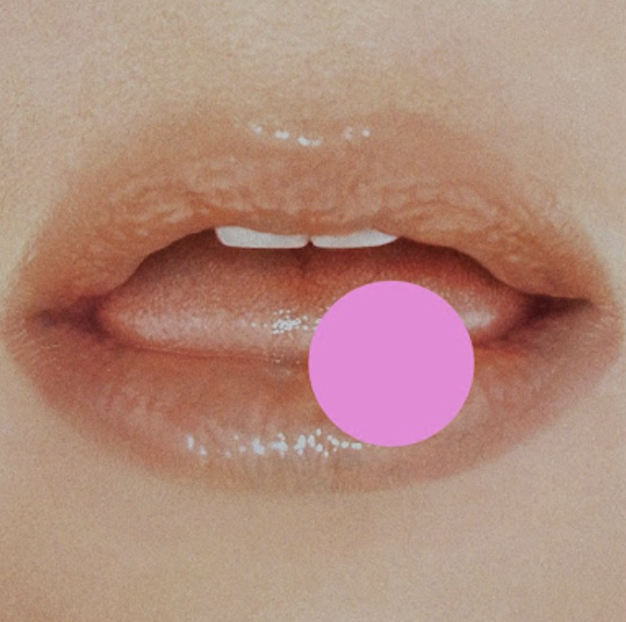
As for the promotional elements of Period, maybe there’s something telling about how she chose to put giant pink dots over all of her previous albums in celebration of the new album. Sort of like what Charli XCX did by turning all of her previous albums into the Brat aesthetic, janky font and all. Except that, in Kesha’s case, the giant pink period blots out all the previous iterations of herself that were not entirely real. Not entirely, well, her. Always compromised in some way. But now, as of this Fourth of July, audiences are at last seeing a free woman with total autonomy. Embodying the theoretical meaning of the American dream.


[…] Once Again, Kesha Is the Only Reason to Celebrate Independence Day Thanks to Period […]