


Whenever “times is tough,” it always seems as though arts and entertainment are thrown under the bus more than usual for being “frivolous” and ultimately “insignificant.” Too frivolous and insignificant, in fact, to be “bothered with.” To that point, those who dare to “enjoy” it or even talk about it during especially bleak moments in history are often viewed as “insensitive” or “out of touch.” Branded as prime examples of being that increasingly derisive word: “privileged.” For who has time or money to enjoy art but that particular set? (Never mind that the rich are so often the most “undercover” uncultured.)
And so, as if to address those thoughts running through many people’s minds (even those who tuned in to watch) as the 98th Academy Awards aired on March 15th, the show’s host, Conan O’Brien, took pause to say, “If I can be serious for just a moment, everyone watching right now around the world is all too aware that these are very chaotic, frightening times. It’s at moments like these that I believe that the Oscars are particularly resonant. Check it out: thirty-one countries across six continents are represented this evening. And every film we salute is the product of thousands of people speaking different languages, working hard to make something of beauty. We pay tribute tonight not just to film, but to the ideals of global artistry, collaboration, patience, resilience and that rarest of qualities today: optimism.”
And it’s true, optimism is not only at a premium, it’s also deemed to be an endlessly naïve worldview in the present era. Even so, O’Brien insisted, “Let us celebrate not because we think all is well, but because we work and hope for better in the days ahead.” To be sure, many of the films nominated this year were filled with optimism, including the major frontrunners of the night, One Battle After Another, Hamnet and, yes, even Sinners. Hell, even Marty Supreme, for that matter. Though it felt like no coincidence that said film was noticeably boxed out of any wins, even if it was noted that the Academy already voted on its choices long before Timothée Chalamet came under fire for his comments deriding opera and ballet as dead mediums that “no one cares about.”
As Chalamet quickly learned, quite a few people cared enough for the internet to keep talking about his philistine nature for weeks, and of course, for O’Brien to make him the butt of one of the jokes in his opening monologue: “Security is extremely tight tonight. Just gotta mention that, yeah. I’m told there’s concerns about an attack from both the opera and ballet communities.” The camera then cuts to Chalamet and his girlfriend, Kylie Jenner, doing their best to pretend to be in on the joke, smiling and laughing along, before O’Brien adds, “They’re just mad you left out jazz.”
And then, that was the last anyone saw of Chalamet during the broadcast, with the rest of it left to give One Battle After Another and Sinners their spotlight. And then, because of Jessie Buckley—a.k.a. Ireland’s own—Hamnet, too, was given its due as well. Indeed, it hardly seems like a coincidence, due to the current climate, that all three films are extremely political in their way, with One Battle After Another being the most overt, while Sinners takes on racism through the lens not just of the Jim Crow South, but “supernatural evil” a.k.a. a white (well, Irish) vampire that sets off the chain of chaos that follows the Smokestack Twins for the rest of the film.
Hamnet, instead, is all about the ways in which women are not only limited by the proverbial patriarchy, but how much they do to keep the wheels of this world turning, particularly through mothering. So it was that when Buckley, who became the first Irish woman to win the Best Actress award, took the stage, she was sure to state during her acceptance speech, “I would like to dedicate this to the beautiful chaos of a mother’s heart.” This after also mentioning that March 15th just so happened to be Mother’s Day in the UK. Thus, this “daughter of the UK” gave her motherland the greatest gift she could.
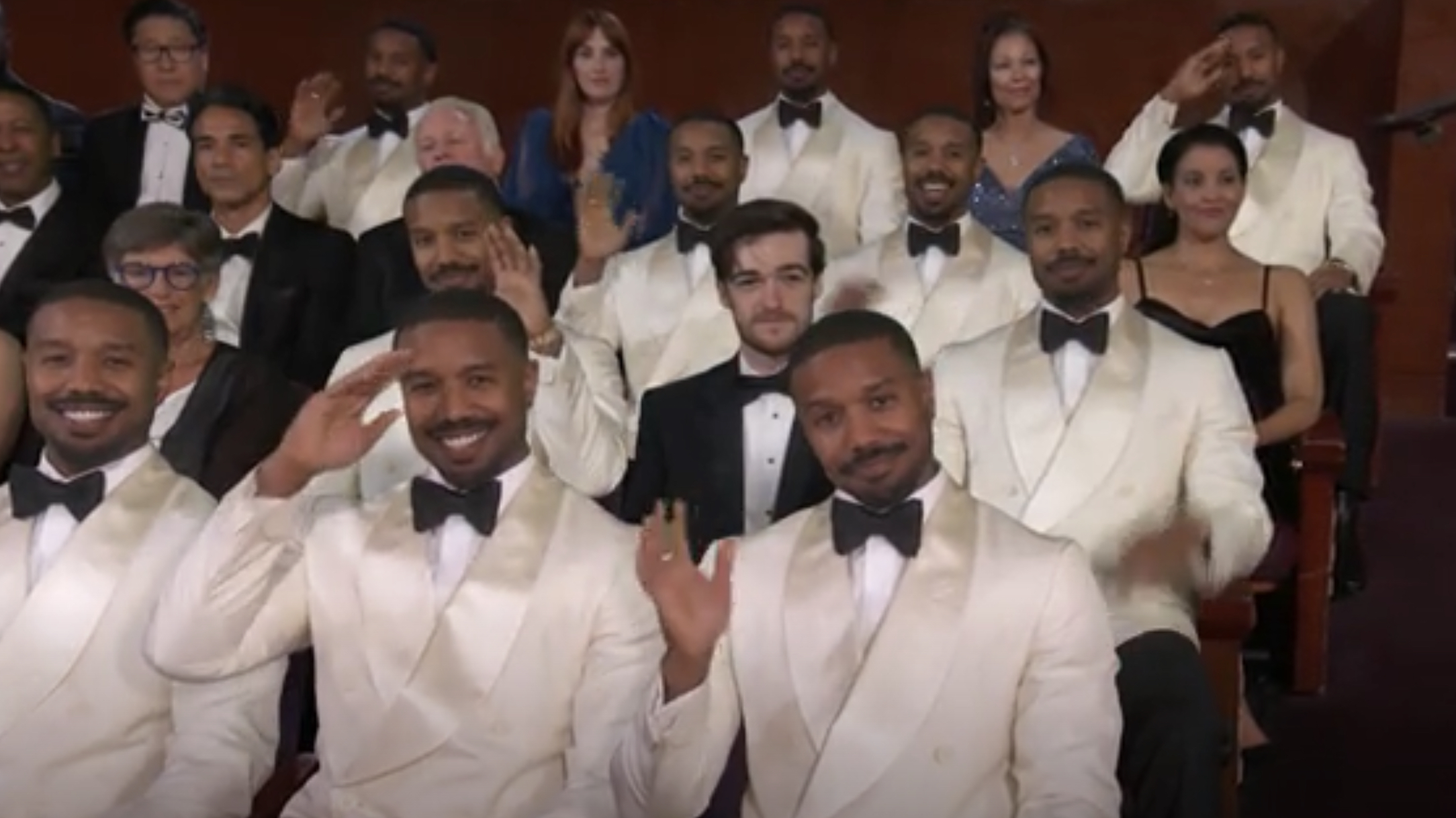
Amidst the more tearful moments (including three heart-wrenching tributes from Billy Crystal to Rob and Michele Reiner, from Rachel McAdams to Diane Keaton and from Barbra Streisand to Robert Redford), there were many notes of levity. And it started from the very beginning with O’Brien engaging in something that’s been missing from movie awards shows for far too long: parodying the films themselves. Which is why he began his cold open for the show dressed as Gladys, the unsettling villain in Zach Cregger’s Weapons. A movie that secured a major coup for the horror genre at the Oscars this year, with Madigan winning yet again for Best Supporting Actress (after also doing so at the Actor Awards, formerly known as the SAG Awards), and setting a new precedent for the longest time in between nominations for an actor.
Madigan’s biggest thank you went to her longtime husband, Ed Harris, who has himself been nominated a few times by the Academy for Best Supporting Actor, but has never managed to win (so hopefully it doesn’t cause any household contention). As for O’Brien’s sendup of Gladys, he continued to play her while pursued by a horde of bewitched children as he also enters the cinematic universes of F1, Marty Supreme, Hamnet, One Battle After Another, KPop Demon Hunters, Sentimental Value and Sinners—and all to the tune of Beastie Boys’ “Sabotage.”
The opening was, in fact, a harkening back to the fun of, not the Academy Awards, but the MTV Movie Awards in its heyday, when someone like Sarah Jessica Parker would host and be all too game to make a “crossover episode” of Sex and the City with The Matrix—the movie darling of that moment—as her own cold open for the show. The playful tone didn’t end with O’Brien’s intro though. There were also moments of levity when Anna Wintour and Anne Hathaway (unofficially promoting The Devil Wears Prada 2) presented the awards for Best Costume Design and Best Makeup and Hairstyling (both of which went to Frankenstein, a film that, frank[enstein]ly, pales in comparison to another Buckley-starring movie, The Bride!)—the latter of which should have gone to The Ugly Stepsister—when the cast of Bridesmaids reunited onstage to present the award for Best Score and when Kieran Culkin, who won for Best Supporting Actor the previous year, took the stage to present to this year’s nominees in that category, only for it to be given to an absent Sean Penn (for One Battle After Another). Culkin accepted the award for him by quipping, “Sean Penn couldn’t be here this evening, or didn’t want to, so I’ll be accepting the award on his behalf.” And that’s how you win for Best Supporting Actor two years in a row without having to work too much.
When the time came to announce the winner for Best Adapted Screenplay, Paul Thomas Anderson broke his streak of being shut out by the Academy for almost thirty years (with his first nomination being for Boogie Nights). And apparently, the last movie he adapted from a Thomas Pynchon novel, Inherent Vice, just wasn’t speaking to people the way the One Battle After Another (adapted from Vineland) has. But maybe that’s because this one felt so much more personal, something confirmed by Anderson when he said in his first speech of the night, “I wrote this movie for my kids to say sorry for the housekeeping mess that we left in this world we’re handing off to them. But also with the encouragement that they will be the generation that hopefully brings us some common sense and decency.” Alas, Anderson didn’t seem to take notice of the report that Gen Z marks the first generation to be dumber than previous ones, which, naturally, does not bode well at all for the generations that come after. But remember, optimism. The word of the night, and the concept that has been getting many people through the current administration’s erratic, backwards policies.
And, talking again of politics, out of everyone, Javier Bardem, of all people, was the most unapologetically political, getting right to the point as one of the presenters for Best International Feature (which went to Sentimental Value) by saying, “No to war and free Palestine.” Earlier in the night, however, O’Brien had given the disclaimer that, “I should warn you that tonight could get political, okay?” This followed by the joke that if anyone had a problem with that, they could go to the “alternative Oscars” down the street at Dave & Buster’s being hosted by Kid Rock (a nod to the madness of Kid Rock hosting an “All-American Halftime Show” as a way to racistly demean Bad Bunny being the headlining artist for this year’s Super Bowl Halftime Show).
O’Brien clearly meant what he said by soon after making a scathing joke about how at least the British arrest their pedophiles. Proof that just because the Orange One entered an arbitrary and extremely ill-advised war with Iran doesn’t mean that anyone has “forgotten” about the Epstein files. Especially those in Hollywood, who are closer to it than most.
What’s more, O’Brien framed the night for what it was: a space for honoring some of the last people who are actually “saying something” (a.k.a. being political)—or at least trying to—with their art. And, the more that time goes by in the current conditions, the more one ought to appreciate this, well, “luxury.” This “privilege.” Because it feels like it could disappear at any moment at the rate that things are going. Of course, one prays that the Academy Awards ceremony itself can stick around just a little longer so that, someday, Diane Warren might finally get her own longer overdue Oscar for Best Original Song.


