


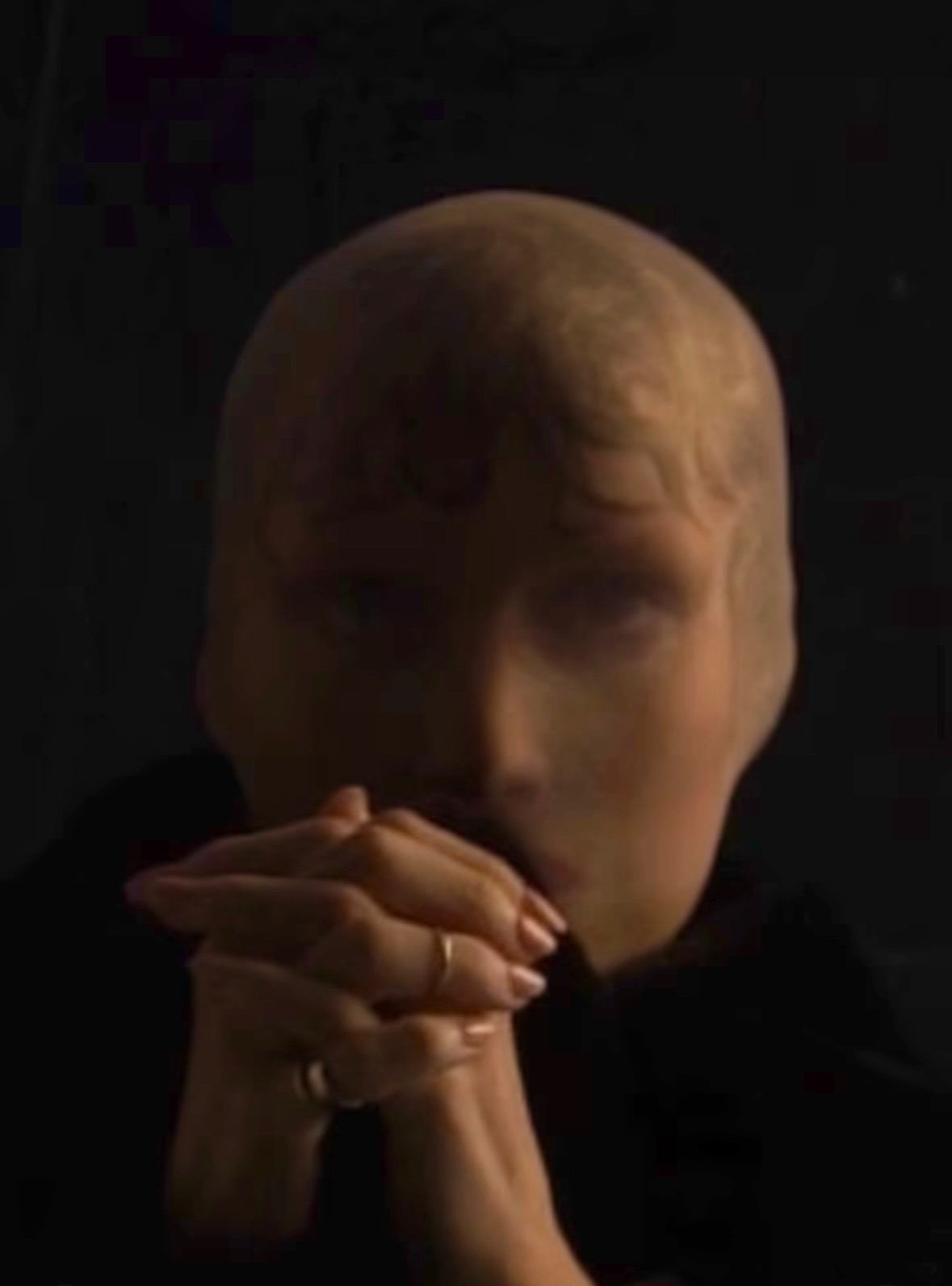
Just as Madonna, once upon a time (in the pre-Madame X era), never let four years go by without releasing a new album, that same pattern has held true for Lykke Li. And now, like clockwork, as if realizing that more than four years couldn’t go by without offering listeners her next masterpiece, Li has returned to the scene. Granted, she was working on this upcoming new album almost immediately after her fifth record, Eyeye, came out.
In any case, announcing the release of her sixth album, The Afterparty, also came with the release of its lead single, “Lucky Again,” which, if she plays her cards right will be the album’s only single before it is officially released on May 8th—otherwise, she’ll give away too much of the nine-track album too soon. And while that might seem like a small amount to those who have been waiting four years for her return, it’s not as if Li’s previous albums (save for Youth Novels) have ever pushed past the ten-track mark. Instead, she prefers quality over quantity. And, if “Lucky Again” is any indication of that commitment to quality, her fans are in for an emotional roller coaster (as is always the case with Li’s work) once the full album drops. Not to mention what one hopes will be an accompanying video, since all that’s available at present is the “lyric video” featuring the title of the song in an If You’re Reading This It’s Too Late-esque font (Li’s nod, perhaps to Drake remixing “A Little Bit” in 2009…though it’s a weird time in the culture to remind the masses of one’s association with Drake; that is, post-getting his ass handed to him by Kendrick).
As for the making of the album, Li chose to write it in Los Angeles (the place she’s called home for some time now) and record it in her native Sweden with a seventeen-piece orchestra (a maneuver that smacks of what ROSALÍA did for Lux). To that point, the orchestral sound of the overall record is made known with the opening strings to “Lucky Again,” which samples from Max Richter’s take on Vivaldi’s “Spring” (billed as “Spring 1” by Richter) from The Four Seasons. So yes, right from the jump, Li is making it known that she wasn’t using understatement when she said that she was in her “existential era” while making The Afterparty. And, in commenting on her use of The Four Seasons sample, Li noted, “To me it’s samsara [‘the cycle of death and rebirth to which life in the material world is bound’] in a song. The wheel of life; winning, losing, living, dying. Having had something and praying you’ll have it again. Whether it’s sex, money, [feelings, die] vitality, love. I always said I wanted the Vivaldi song at my wedding or funeral but I think this is giving more revenge heist energy.” She’s not wrong there, with this track easily imaginable in a remake of Thelma and Louise.
As for her point about “the wheel of life” and being able to “have something again,” for Li, that refers perhaps foremost to the presence of “the muse.” And constantly fretting over whether or not She might ever be able to return after bequeathing Li with her latest “lightning in a bottle” moment. That much was expressed in her recent interview with Highsnobiety, during which she admitted, “I’m like, ‘Surely this is the last time I’ll get to touch God like this.’ It’s so finite. You never know if you’re going to have that access again.”
But it seems that “Lucky Again” has allowed her that access, its earnest, pleading tone also being on-brand with previous Li masterworks (dare one even say that it’s as much of an earworm as “I Follow Rivers,” the song that remains, arguably, her “signature single”). It also speaks to the overarching theme and metaphor of The Afterparty with its use of drunken analogies (à la The Weeknd on After Hours and Dawn FM) from the outset: “I wait and I wait/Won’t be long till I’m facedown/I wait for God’s sake/Save me ‘fore I blackout/It’s so dark out/Oh Lord/Oh Lord.” Here, with Li’s use of the phrase “Oh Lord,” it’s worth mentioning that it appears to be a bit of a trend in music right now to invoke the name of the “Lord,” with Taylor Swift’s “Opalite” also using it, albeit in a far chirpier way as she sings, “Oh-oh-oh-oh, oh my Lord/Never met no one like you before.”
Li’s vibe and lyrical delivery isn’t quite so plucky…though, at its core, “Lucky Again” does bear an optimistic message, which is: “If we’re lucky, we’ll get lucky again” (yes, it’s ripe for a mashup with Daft Punk’s “Get Lucky”). The fine-print word there clearly being “if”—because without having a bit of luck from the get-go, it’s rare that one’s fortunes will change (see also: capitalism). And therein lies the dark side of Li’s work, the side that probes the “unpleasant” things most people can’t handle.
Indeed, Li even went so far as to say that this album was all about exploring her “lower self.” In other words, “I find that we’re in an era where everyone is talking about ‘my higher self.’ Fuck that. This is an album dealing with your lower self: your need for revenge, your shame, despair, all of it.” To that point, at another moment in her Highsnobiety interview, it’s brought up that Li watched Taylor Swift’s The End of an Era docuseries, during which it occurred to her, as if for the first time, that Swift has achieved that rare feat: “Doing what you love and getting paid and getting to eat the cake.” Whereas most other artists and musicians, even ones at Li’s level, ultimately only make art because it’s “having a tube of oxygen to help you get through life—so you can survive being a human.”
But who knows? Life is long, as it is sometimes said. And maybe, since she’s been lucky enough thus far, Li will get even luckier again in the future, therefore achieving that Swift-inspired goal: “getting to eat the cake” a.k.a. having your cake and eating it too a.k.a. being paid handsomely and accordingly for your art—and all the emotional struggles that go into creating it.


