


Sometimes, it’s difficult to decide which generation has it worse (though less so which is just plain worse): millennials or Gen Z. On the one hand, millennials got to experience a child sans social media; on the other, they’ve been the victim of just about every historical misfortune of the twenty-first century (whether it was 9/11, Britney’s mental breakdown and subsequent conservatorship, the 2008 financial crisis, an abysmal job market and, therefore, inability to achieve home ownership or the pandemic).
As for Gen Z, their incompetence has been all but cemented by a recent study that confirmed they’re the first generation to be less “intelligent” (this refers to cognitive skills especially) than their forebears. Not to mention how they’ve been saddled with a jankier version of the planet in their current state of youth. In addition to “arguing” about who has it worse between the two generations (with Alpha and Beta still not even entering the conversation—perhaps because people are still too afraid to ponder what that ilk is going to be like in their adult years), millennials and Gen Zers have become, at least on the internet, known for their somewhat contentious relationship.
Where Gen Z is concerned, it’s all about finding random-ass things to mock millennials for—mainly skinny jeans and side-parted hair (which is really scraping the bottom of the barrel in terms of finding characteristics to nitpick). Millennials, in return, find most of their vexation with Gen Z stemming from what one meme (posted by @yusawillie) has referred to as being “the most Christopher Columbus ass generation. They are constantly ‘discovering’ things that have been around forever and presenting them to the internet like it’s new.” Not only that, but they have no knowledge of anything that came before unless the internet does present it to them. Usually via TikTok.
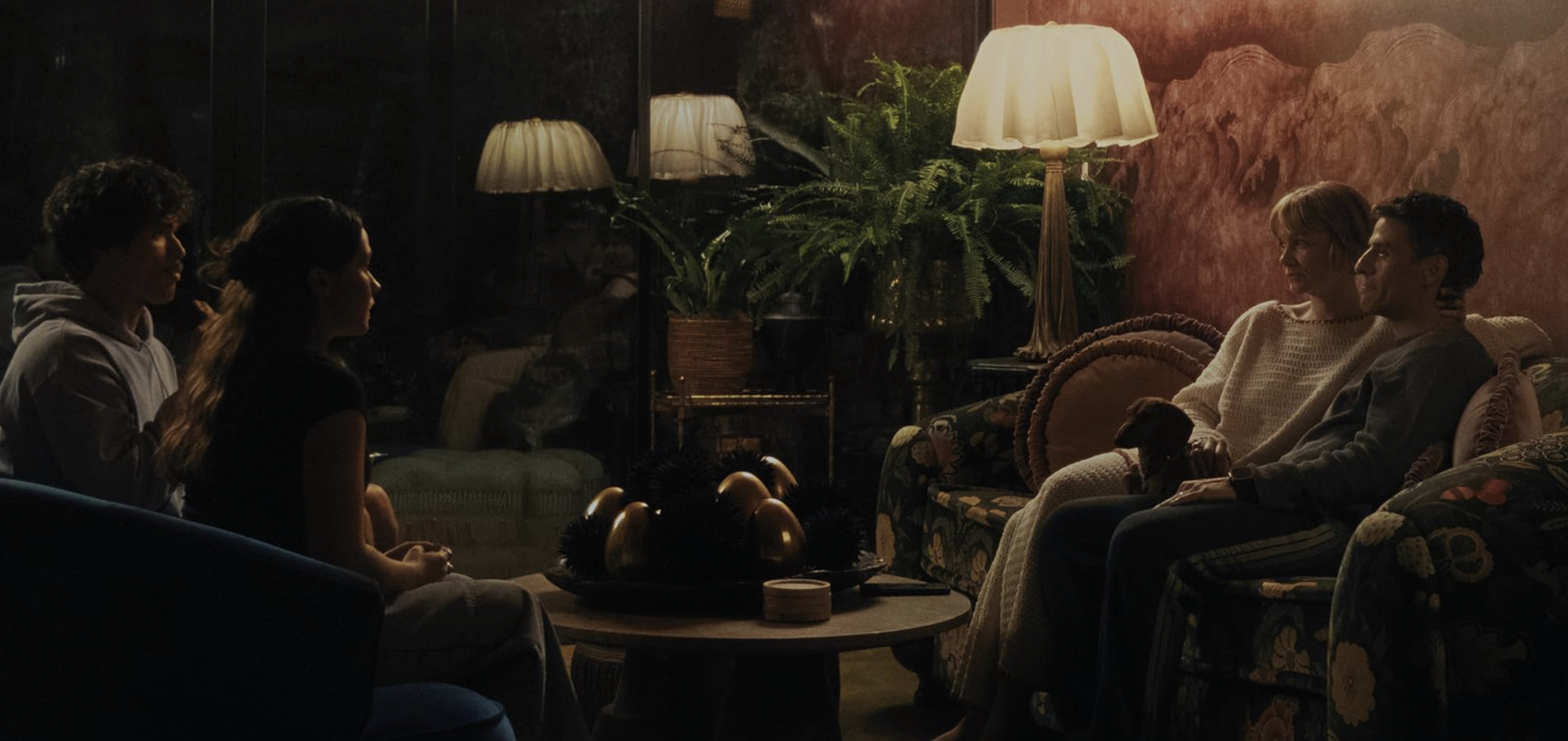
In Beef’s second season, however, that’s not all that “millennials” (as represented by a Gen Xer—Oscar Isaac) take issue with. For Lindsay Crane (Carey Mulligan, an actual millennial) and Josh Martín (Isaac), Gen Z—as represented by Ashley Miller (Cailee Spaeny, a cusping millennial) and Austin Davis (Charles Melton, a millennial)—is also irksome because of their sense of entitlement. Which is, funnily enough, what millennials were generally accused of by “adults” and the media in their teens and twenties. Along with words like “lazy” and “snowflake.” But now the baton has been passed to Gen Z for absorbing such contemptuous classifications. Apparently from millennials themselves.
For, after Josh and Lindsay are blackmailed with a video of them in a violent fight, Josh demands of his wife, “I mean, what the fuck is wrong with kids these days?” She replies matter-of-factly, “Entitlement.” Indeed, Josh and Lindsay can’t stand Ashley in particular, who waltzes into her new office as if she really did “earn” the job. Her childlike essence about the whole thing manifested by her twirling around in her swivel chair in front of the computer. Needless to say, she has no clue what she’s doing in this role and has absolutely no qualifications for it (it’s sort of like when Josh Baskin [Tom Hanks] in Big turns into an adult overnight—literally—and starts working at a toy company where he becomes Vice President of Product Development). But that doesn’t matter. She has the video to keep “lording”—the word used by both Lindsay and Josh to describe their inevitable imprisonment by these two twats pretending as if they’ve actually deleted the evidence when both of them know full well there’s a “backup video.”
And so it is that the central source of contention or “beef” in this installment of the series, some would assume, is of a couple vs. couple/one generation vs. another generation variety. Or, as Beef’s second season continues to draw, well, no comparisons to its first, perhaps what some have found the most glaring difference to be is a so-called generational beef between two demographics that are “practically the same.” In other words, both generations have been passed down an Earth and a system that is completely and utterly fucked. As for the latter—the system of capitalism—it is what’s fucked the Earth. Along with most people’s ability to live any kind of satisfying existence, let alone a happy one (that would be asking for far too much, especially in the U.S.). This is what both sets of couples are ultimately contending with despite that rage manifesting outward toward “the other.” A construct that capitalism thrives on and that the series’ creator and showrunner, Lee Sung Jin, is determined to highlight.
As he said of choosing to create a theoretical beef between two couples with only a small generational divide, “Much like society, we’re brainwashed—by social media, by the headlines, by those in charge—to beef and squabble with each other. You’ve got Gen Z and millennials having this feud, when really the thing that we should be beefing with is the billionaire characters in society like Chairwoman Park, and it’s all kind of a distraction that actually enables those in power to puppeteer everybody. That felt like an appropriate microcosm for what’s going on right now.” And, in all honesty, what’s been going on, in some form or another, since the very “invention” of capitalism, which, in its germinal form, was showing up in European societies as far back as the sixteenth century.
Eventually, its evolution extended into United States healthcare, which serves as a cornerstone of Lee’s commentary in this season. In fact, needing health insurance is the entire reason that Ashley feels obliged to compromise any semblance of a moral code in order to blackmail her employer. Who she ends up calling “boomer” (since everyone who is not in their twenties, to Gen Z, qualifies as being what they bill as that derisive word)—or, more specifically, she tells him, “I don’t need your fucking help, you fucking boomer.” This when Josh offers to make her hospital visit far more seamless and expedient than it would be if she continues to wait via the “proper channels.” That is, if she agrees to genuinely delete the incriminating video.
Naturally, Ashley is not willing to cooperate, prompting Josh to tell her to “enjoy the wait.” And so it is that, because she then blames Josh for having to wait (ergo, losing her ovary in an emergency surgery), the “generational war” ratchets up by the end of this episode, “Oh the Comfort, the Inexpressible Comfort.” For that’s when Ashley decides to infiltrate Josh and Lindsay’s home and do a few fucked-up things. Not just mixing her vaginal blood into Josh’s pitcher orange juice, but also “accidentally” leaving the door open so that they’re prized Dachshund, Burberry (played by a dog named Jones), gets out and becomes vulnerable to a terrible, decidedly Californian fate.
As the nature of the feud changes track slightly toward the end of the season (which is only eight episodes to the first season’s ten), Lindsay concedes, for her own machinations, to becoming “friends” with Ashley. Someone she still fundamentally views as a twit. Most likely because, yes, she’s a Gen Zer. And though neither generation comes out looking any better, per se, than the other—with both succumbing to a proverbial vicious cycle caused by the system—it must be said that true millennial Mulligan’s performance serves major cunt in the best possible way. Whereas Spaeny’s character only grows more annoying and insufferable with each passing episode.


