


In a series called Mondo Bullshittio, let’s talk about some of the most glaring hypocrisies and faux pas in pop culture…and all that it affects (and reflects).
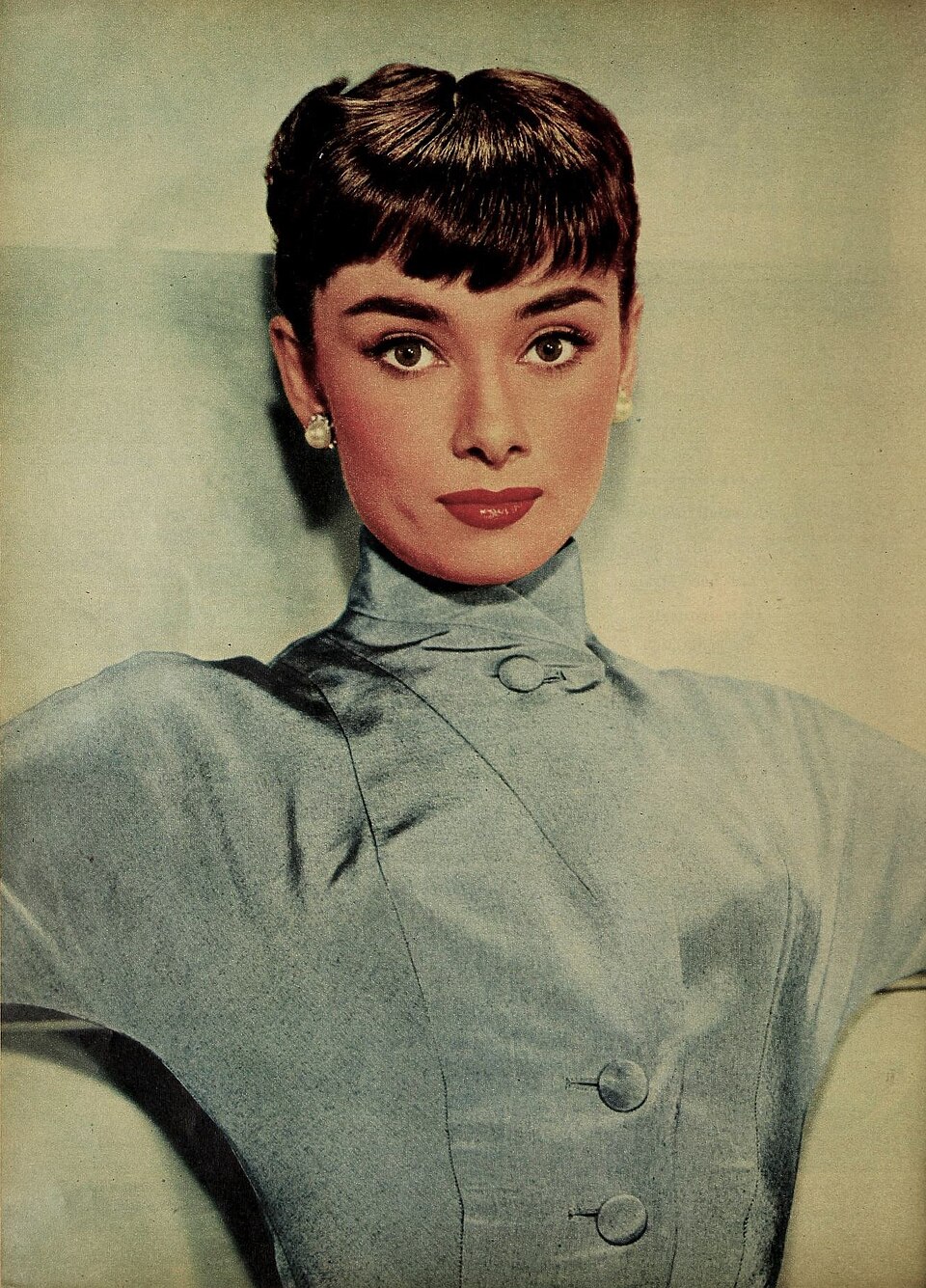
Looking back now, the irony of what Truman Capote said about Audrey Hepburn being cast as Holly Golightly in Breakfast at Tiffany’s more than applies to Lily Collins presently being cast as Audrey Hepburn: “It was the most miscast film I’ve ever seen.” Of course, because of the way that Collins “looks”—that is to say, thin and angular—it seems plenty sufficient to the Hollywood set to make her “viable enough” to play Audrey. Even though there is far more to a part like this than appearance alone. And, based on Collins’ past oeuvre, it’s obvious she doesn’t have the acting chops to carry this off.
As for Capote, his abovementioned assessment of the casting for Breakfast at Tiffany’s was not necessarily a dig at Hepburn’s acting ability (after all, she won an Oscar for Best Actress for her first major role in a Hollywood movie, Roman Holiday), it was just that, in Capote’s novella, Golightly was portrayed as the antithesis of a doe-eyed “good girl” like Hepburn. What’s more, the Golightly of the book was of a sort that prompted Capote to rally for Marilyn Monroe to play the role. Never mind that, in 1961, when the film adaptation of Breakfast at Tiffany’s was released, both Hepburn and Monroe were in their thirties and the Holly of the book was placed somewhere around eighteen. Rendering her character all the more “scandalous” for daring to escape Texas and make her way, however sordidly, in the big city without waiting for help from anyone else. Well, except the men who give her fifty dollars “for the powder room.”
The “implications” of getting this kind of money for offering the pleasure of her company have led many to write her off as a sex worker (or, as it was said more crudely at the time, a prostitute). However, Capote had a more nuanced term for how he viewed Holly: as an American geisha. As Capote himself phrased it to Playboy in a 1968 interview, “Holly Golightly was not precisely a call girl. She had no job, but accompanied expense-account men to the best restaurants and night clubs, with the understanding that her escort was obligated to give her some sort of gift, perhaps jewelry or a check… if she felt like it, she might take her escort home for the night. So these girls are the authentic American geishas, and they’re much more prevalent now than in 1943 or 1944, which was Holly’s era.” For this is the time when Capote sets the stage in the book, itself released in 1958. So yes, for the era when Golightly originally existed—just before WWII ended—she was quite progressive indeed.
When the era was then brought to the then present of the early 60s, as the “liberated woman” of that decade was still about to bubble to the surface, Golightly’s, let’s say, joie de vivre wasn’t so unexpected. And with the help of a “good girl” like Hepburn to show the “average woman” that being single and carefree wasn’t the tragedy that a movie like BUtterfield 8 (released the year before, in 1960—and also adapted from a novel) made it out to be, the sexual revolution was being given an unwitting push in the right direction. Indeed, if Monroe had played the part, the meaning of Holly would have, in all likelihood, not have been quite so insidiously impactful. Moreover, one imagines Monroe would only play Holly the same way she did The Girl in The Seven Year Itch or Sugar in Some Like It Hot. Which is, to be sure, probably why Capote wanted her for the role.
In any case, all the harrowing details behind the making of the film are the subject of Sam Wasson’s 2010 book, Fifth Avenue, 5 A.M.: Audrey Hepburn, Breakfast at Tiffany’s and the Dawn of the Modern Woman. The very book that’s being adapted into yet another movie where a miscasting is at play. For, with Lily Collins in the role, there’s no doubt that the cringe and irritation factor is bound to be on full blast. Particularly for those who genuinely appreciate Hepburn and her cinematic contributions. But because Collins doesn’t appear that far off from the basique bitch she’s playing on Emily in Paris, she seems to assume that being both dainty/birdlike and “liking Audrey’s style” is enough to embody her in a film role.
Naturally, though, Collins has made the attempt to bill herself as a bona fide fan girl, announcing on her Instagram account, “It’s with almost ten years of development and a lifetime of admiration and adoration for Audrey that I’m finally able to share this. Honored and ecstatic don’t begin to express how I feel…” Collins, of course, wouldn’t dream of using certain other words to express how she feels…like, say, not exactly worthy of the part, but still going for it anyway because, hey, in her mind, it’s probably not much of stretch from playing Emily Cooper. A character for whom everything comes easily and for whom the world (in this case, Paris) is painted in nothing but sunshine and roses. Even though this was the opposite of Hepburn’s fraught early life (for, just because she was born into an aristocratic family, didn’t mean the rigors of WWII didn’t affect her immensely, including her near-death experience as a result of malnutrition—the latter famously being what people have attributed her lifelong thinness to).
Meanwhile, the most obvious choice of the moment for someone to take on this part would have been Ariana Grande, who, for the past year at least—whether for random photoshoots or red carpet moments—has been blatantly auditioning to be Audrey with her visual cues and sartorial nods. And surely, her “knowledge” of Hepburn is at least “on par” with Collins’, which means, between the two of them, Grande ought to have been given the chance. After all, she’s the Oscar-nominated one, to boot.
Alas, whatever Collins “exudes” onscreen when the time comes, it’s probably already safe to say that Jennifer Love Hewitt was still a better fit in The Audrey Hepburn Story. Which, of course, is really saying something.


