



Audiences are not quite ready to progress fully to what it means to be “avant-garde.” Thus, they’ve latched onto Richard Linklater’s made in real time narrative about the whitest kid you know.

Another indication that film viewers want to take their time veering away from the mainstream, as Wes Anderson is the most mainstream you can get on an “indie” level.

People are struggling with the established ideal of monogamy, and want to live vicariously through other characters who can actually get laid outside of their marriage.

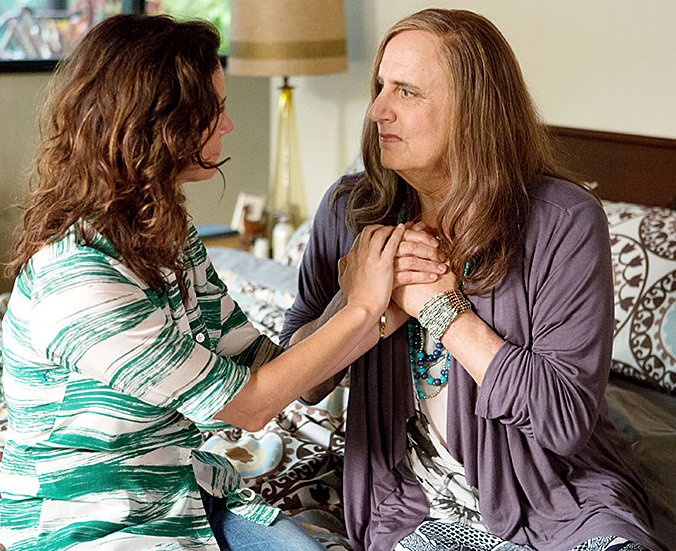
The clearest indication that there has been an utter lack in capturing the trans demographic adequately. Also, it means that people have finally started coming to their senses about what a shitty show Girls is.

People still can’t not vote for the character with the disability. Cumberbatch would have been a close runner-up with his homosexuality.

A love of all things meta has been a common trend in feature film and TV narratives over the last decade. And so, paying homage to Keaton by throwing him a bone for playing a washed up actor as a washed up actor seems only logical.

Because giving it to Rosamund Pike or Reese Witherspoon would have been too obvious–and nobody likes an obvious choice. Plus, Julianne Moore is playing someone with Alzheimer’s, so, you know, it’s like Eddie Redmayne winning.

In these corrupt political times, it’s nice to know that Kevin Spacey’s portrayal as the Commander-in-Chief doesn’t stray far from reality–even if it is hyperrealism. And this is the one thing American audiences have always loved since Watergate: a morally flawed leader.Though it’s somewhat disappointing that Clive Owen didn’t win for his looks.

Because it would have been too real for Viola Davis to win for How to Get Away With Murder, yet audiences were still lusting after some fresh blood for this category.

You don’t wear wigs and dresses and sing a macabre version of “Somebody That I Used to Know” without getting some kind of recognition.

The only thing audiences love more than addressing gender rights is feminism. And Big Eyes has it in spades. Moreover, Tim Burton is suffering from breakup, so Big Eyes needed a nod.

Being a prick with deep emotional complexity is the only other shoo-in for winning an award. And J.K. Simmons as a tyrannical jazz band conductor with issues put other contenders in the category to shame–even Edward Norton. Furthermore, an audience always loves to see a “villain” defeated by the protagonist, especially in times when such a feat isn’t the norm.

Aging onscreen as a woman shows the sort of comfortableness with oneself that those living in the 2010s can really admire. Because everyone’s over spending money on plastic surgery at this point.

America remains constant in one cultural facet: not knowing how to handle sex. And yet again, the snubbing of Girls lends hope to the notion that maybe America hasn’t gone totally mongo.

Everyone loves to applaud an auteur, even though Wes Anderson was the more deserving one in this scenario. Or even David Fincher.

This is consistently the most reassuring category contained within the Golden Globes nominations, as the Hollywood Foreign Press always seems to show infinite regard for the fact that the script is the most important part of the movie. Nothing can mask a bad script. Birdman is a reflection of an evermore celebrity-obsessed mass willing to swallow up any story that’s peddled to them regardless of substance. It is also the final word in addressing the age-old question of how it can ever be possible to marry art and commercialism–a salient query in a time where entrepreneurship seems the sole way to find contentment.


