


American directors aren’t exactly known for being what Cher Horowitz would call “way existential,” or even remotely thought-provoking. All the biggest names in the industry that aren’t total “blockbuster whores” (e.g., Michael Bay), from Steven Spielberg to Ron Howard, could never hold a candle to what the European masters of cinema have done with the medium. Most significantly, because they have always had something real to say about life and its total insanity.
Spielberg, at least, delves a little deeper beneath the surface than most mainstream American auteurs—so maybe that was part of why Lynch agreed to a cameo role in Spielberg’s most recent film, The Fabelmans (who knew it would end up also being Lynch’s last onscreen appearance for an acting role?). In it, he plays another legendary director: John Ford. Among the few American directors that one could classify as “trying to say something” with the visual aspect of the medium. To be sure, Ford is often considered the first American auteur in film. Paving the way for directors after him to develop their own hallmarks of style. Lynch included.
Even so, Lynch was always fonder of the European directors—including Federico Fellini, Ingmar Bergman, Jean-Luc Godard and Werner Herzog. As he says in Lynch on Lynch, “You go to films for different reasons: just to go, and then there are ones that get down and thrill your soul. And probably most of those came from Europe.” The interviewer (and editor of the book), Chris Rodley, then asks the follow-up question, “Is that something to do with the fact that they’re not as driven by narrative as American films?” Lynch confirms, “Yes. Exactly. I think so.” For no one knows better than the auteur himself how meandering and dreamlike—rather than “narrative-focused”—his work can be.
Another American auteur from small-town beginnings, Robert Altman, also had, in his way, a similar style…particularly in a film like 1977’s 3 Women and in terms of constantly “reusing” the same group of actors (a.k.a. muses, male and female alike). And then, of course, there is the fact that both Altman and Lynch had their time to shine in the art of making a “vinegar valentine” to Hollywood. For Altman, that was 1992’s The Player; for Lynch, that was 2001’s Mulholland Drive (and, need one remind that it was French financing, through Canal+, that made said film possible?).
What’s more, on the occasion when either director made their attempt to go “mainstream” with a big-budget Hollywood movie, it failed spectacularly (for Altman, that was 1980’s Popeye; for Lynch, that was 1984’s Dune). Just further proof that these were the type of American writer-directors who simply couldn’t exist within the Hollywood machine. They had too much to say of a non-bullshit variety. In effect, they were not American enough as directors. This is, inarguably, why Lynch never made an attempt to direct a big-budget studio movie again. In truth, it was a total fluke that he landed the gig in the first place, with the film’s producer, Raffaella De Laurentiis, daughter of Dino, seeing something in his work via The Elephant Man that prompted her to tap him for the job.
It was an almost instant regret for Lynch to take the offer. As he recalled, “I started selling out on Dune. Looking back, it’s no one’s fault but my own. I probably shouldn’t have done that picture, but I saw tons and tons of possibilities for things I loved, and this was the structure to do them in. There was so much room to create a world. But I got strong indications from Raffaella and Dino De Laurentiis of what kind of film they expected, and I knew I didn’t have final cut.”
However, for as much as Lynch may have regretted the film (even wielding the famous Alan Smithee moniker in the credits of certain versions), it led him to his greatest leading man, Kyle MacLachlan. To this day, MacLachlan continues to reiterate, “…for reasons beyond my comprehension, David Lynch plucked me out of obscurity to star in his first and last big-budget movie. He clearly saw something in me that even I didn’t recognize. I owe my entire career, and life really, to his vision.” And yes, after Dune, MacLachlan landed the Lynch role that would truly garner him some respect: 1986’s Blue Velvet. Establishing his “kooky” sensibilities and a long-standing theme of his work—that the “nicest” places are the most fucked—Blue Velvet was a lynchpin in both men’s careers.
In the years that followed, Lynch would only let his “freak flag” fly all the louder and prouder with Wild at Heart, Twin Peaks: Fire Walk With Me, Lost Highway, The Straight Story (a lesser touted film of his), Mulholland Drive and his unspoken final film, Inland Empire. Though it was already obvious to many that Lynch essentially “retired” from filmmaking after Inland Empire, he explained his decision to walk away from the big screen back in 2017 (as Twin Peaks: The Return was set to air): “Things changed a lot. So many films were not doing well at the box office even though they might have been great films and the things that were doing well at the box office weren’t the things that I would want to do.” Hence, his return to the small screen at a time when the medium of television provided (and provides) far more creative freedom than film.
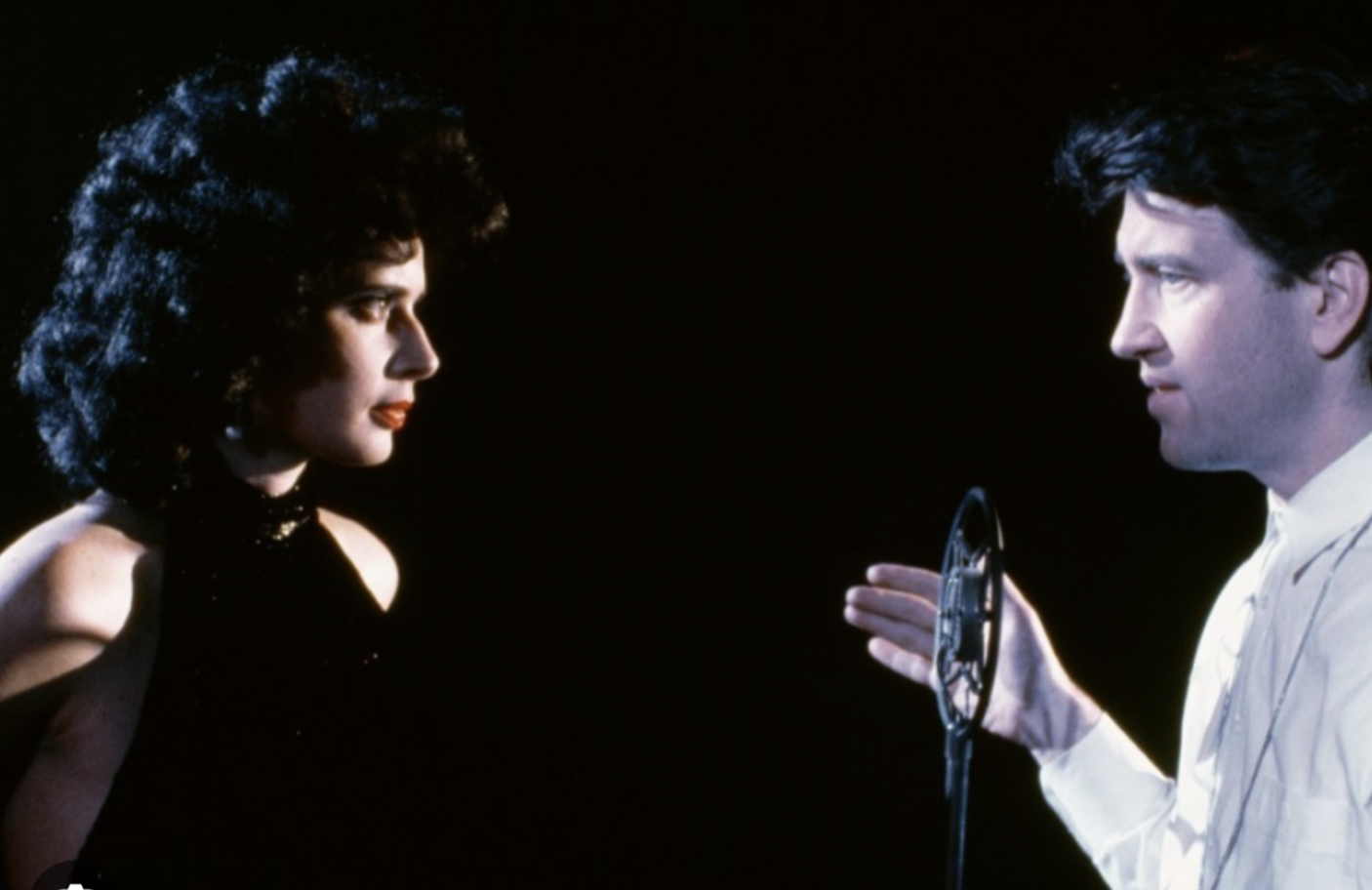
Indeed, Lynch is often more recognized for his contributions to TV via Twin Peaks than any of his “weirdo” movies. Too “weirdo,” anyway, for most average American audiences. But to the average European, Lynch isn’t a quack, but a soothsayer. Which is why it’s no coincidence that, during the filming of Blue Velvet, Isabella Rossellini (who played the part of Dorothy Vallens) became romantically involved with Lynch, and the two would go on to be in a relationship for five years. After all, how could the daughter of a titan director like Roberto Rossellini resist the European sensitivities and appreciations of Lynch?
Because, yes, for all the talk of him being a director that focused on the dark side of Americana (à la Lana Del Rey after him), Lynch remains the most European writer-director that the U.S. has ever had the privilege to offer up to the rest of the world. There was a time when people might have tried to peddle Woody Allen as America’s “European writer-director,” but no, it was Lynch in the end. Lynch who never tried to pull what Woody Allen himself would call some “pseudointellectual” bullshit. With Lynch, all the wonder, the pondering and the probing for life’s meaning was genuine, not contrived. And served up in the same freaky, inexplicable package that life itself is.


[…] […]