


For many, it’s been a long time coming that RAYE should collaborate with Mark Ronson. After all, the parallel between her voice and Amy Winehouse’s is obvious, hence the fitting choice (/official tribute) of working with Ronson, who produced half of the songs on Winehouse’s indelible Back to Black. Released in 2006, Winehouse’s sophomore (and, sadly, final) album made her a household name outside of her native UK, where she had already found critical success three years prior with her 2003 debut, Frank (including an Ivor Novello Award for “Stronger Than Me”). For RAYE, that same sort of trajectory happened in that it took several years for the U.S. to catch up to what Britain already knew about one of their own: that she had a once-in-a-generation voice.
As for Winehouse, after Back to Black blew her up, she seemed less than keen/focused on recording new music, save for a few errant covers here and there, the most notable being her cover of The Zutons’ “Valerie,” released on Mark Ronson’s own sophomore record, Version, in 2007. Although Ronson was initially skeptical of Winehouse’s decision to cover a track so seemingly at odds with her musical style, hearing the way she transformed it into her own prompted him to straightforwardly remark, “…she went into the studio and tried it. I loved it.” Ever since, few have associated the song with The Zutons as much as they have with Winehouse, a rare feat in the world of covers, achieved mainly by vocal powerhouses like Whitney Houston (specifically, with “I Will Always Love You,” which eclipsed Dolly Parton’s original, just like Winehouse and The Zutons).
And while RAYE and Ronson’s “Suzanne” isn’t a cover like “Valerie,” it’s more than slightly telling on Ronson’s part that he gunned for the single be titled after a woman’s name. Not just any name, but one with a “retro aura.” As he says in the behind-the-scenes video that the pair made for Audemars Piguet, “I don’t know why but I feel like this song’s gotta be called ‘Suzanne.’” But of course, somewhere deep down, he must know why. Because it’s an unbridled love song not to some woman named Suzanne, but to Amy. A celebration of the work they did together, and how it’s continuing, in its way, through the voice of someone such as RAYE (sorry, Dionne Bromfield). A voice that’s soulful in a comparable way to Winehouse’s (though RAYE would be the first to refute that statement).
Yet, in contrast to Winehouse and Ronson’s musical partnership, the catalyst for RAYE and Ronson’s first collab was, ultimately, capitalism. Accordingly, RAYE posted the abovementioned behind-the-scenes footage doubling as a commercial for Audemars Piguet on her Instagram account, captioning it, “What started as a shared spark turned into ‘Suzanne’—the new APxMusic drop celebrating 150 years of Audemars Piguet. A track capturing Mark Ronson, RAYE and AP’s shared values, passion and pursuit of innovation, available on June 13th.” So while some might have hoped this coming together on RAYE and Ronson’s part was due solely to a shared love of Winehouse and wanting to create another “name song” out of that mutual affection, the truth is, instead, slightly less romantic. Complete with RAYE throwing in a couple of “AP” plugs in the video, like, “We need to make a song for AP, innit?” Well, no…not really. And yet, since both RAYE and Ronson both happen to be brand ambassadors for Audemars Piguet, the “synergy” potential for creating a song to commemorate the company’s one hundred and fiftieth anniversary was, evidently, too good to pass up. Besides, as Ronson tells RAYE in the video, “I’ve wanted to work with you for such a long time.”
RAYE, too, reciprocated that feeling, commenting in a press release, “I used to work in Mark Ronson’s London studio when I was a baby artist focusing on my songwriting craft, and always dreamed of the day I could one day work with the musical genius that is Ronson.” That said, the accompanying video, directed by Theodor Guelat, is “all studio” (much like Jessica Simpson’s “Leave”), with scenes of each musician doing their respective “thing” to craft the final product (a far cry from the ribald onstage fun of the “Valerie” video). And yes, in this case, it very much is one—complete with both RAYE and Ronson flashing their Audemars Piguet watches while recording. Even so, RAYE has the cheek to also say in the aforementioned “APxMusic drop” post, “One of my joys in life and what I believe the role of a songwriter is is a commentary on the human experience. That’s what art is.” Riffing on “what art is” by making a watch pun, Ronson adds, “Timeless music.” RAYE confirms, “That is definitely the goal.” Not to, say, help sell some watches. But hey, if it feels like a callback to Amy Winehouse in the process, well, why not? God (or whoever) knows “AP” has some money to burn on supporting a creative project like this. Considering that, according to WatchCharts, “Audemars Piguet watches cost around $35,000 on average, though prices range from around $4,000 to $300,000 depending on the model.”
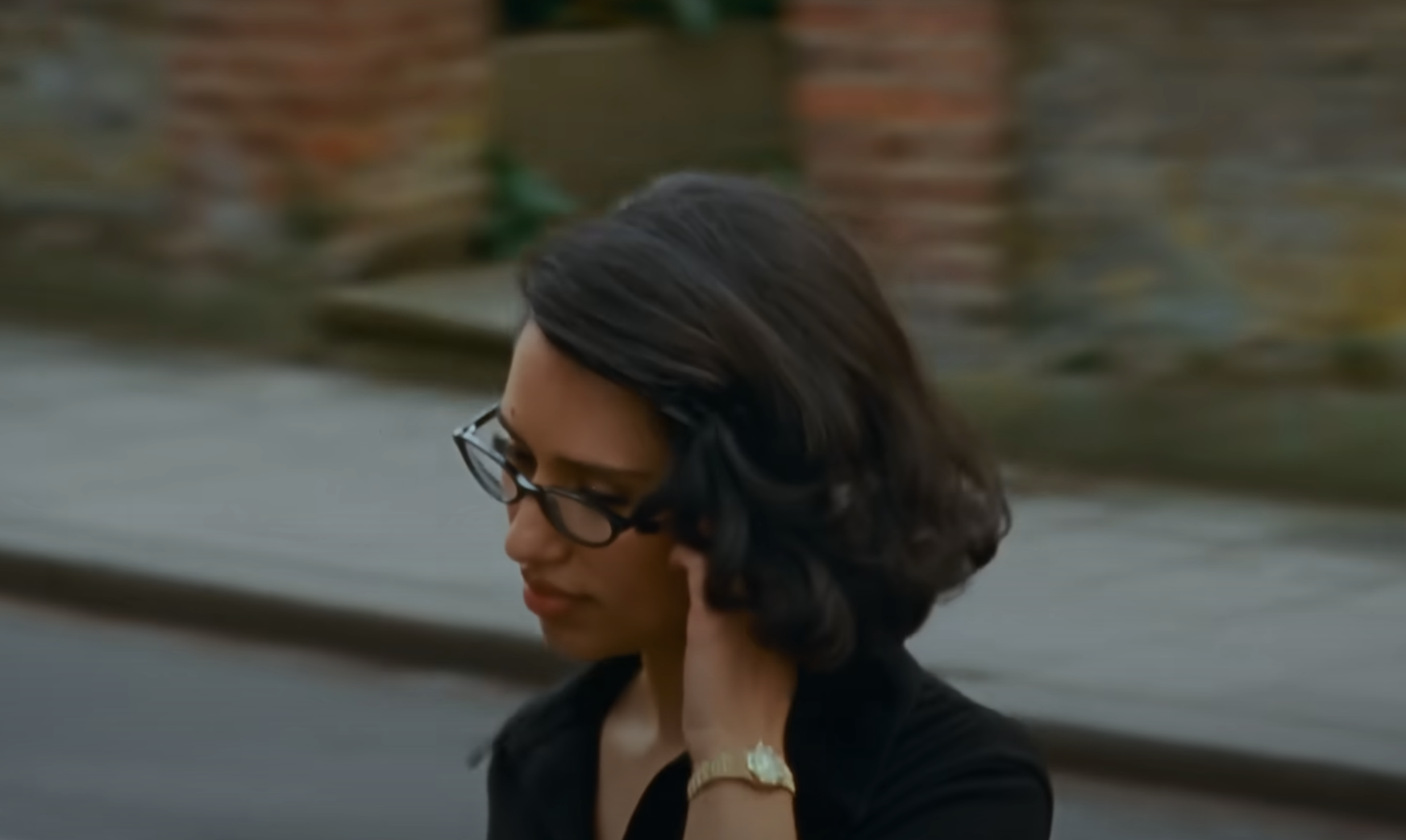
In short, it’s the type of watch that Valerie probably couldn’t afford. Suzanne, on the other hand… Since she’s depicted as one classy bitch, it’s entirely possible RAYE and Ronson imagined the sort of woman who could buy an Audemars Piguet. The sort of woman who could be described all dreamily, as she is in the first verse, “A cigarette in her mouth and she mouths, ‘Hey, dear, how you been?’/Gray skies out the window, but she’s a summer breeze/Come and set the tone/I dare, come sit down next to me/Suzanne/Her hair hangs like curtains, her smile is warm like June.” And while Winehouse renders the perspective of “Valerie” into something that sounds more platonic that it did in The Zutons’ hands, she’s still romanticizing a certain kind of woman: the polar opposite of an Audemars Piguet watch owner. Indeed, Winehouse prefers to spotlight a girl who can barely afford a decent lawyer (“Did you have to go to jail?/Put your house on up for sale?/Did you get a good lawyer?”), let alone even a cheapo watch. A woman who warrants the question, “And did you have to pay that fine/You were dodgin’ all the time?”
Suzanne, of course, would never get a fine. She’s an elegant, moneyed dame who elicits thoughtful poetry from mild-mannered men at bars with oak interiors. Ergo, RAYE’s chorus, “Suzanne, I would love to hold you if I can/Suzanne, Suzanne/If you’d allow my left arm and my right arm to collide inside the small of your back/Just like that/I need you, Suzanne/Oh, Suzanne, how I need you/Ooh, you look so good tonight” (a.k.a. “You look wonderful tonight” or “There’s somethin’ about the way you look tonight”).
It also helps that, although Ronson said, “I don’t know why but I feel like this song’s gotta be called ‘Suzanne,’” a woman named Suzanne Audemars was apparently “a direct ancestor of the Audemars and Piguet families whose story remained unknown until earlier this year” (this being the vague, intrigue-laden description of her on the AP website). Again, synergy. The kind of synergy that Winehouse probably would have balked at. Then again, who knows? If she had survived twenty-seven, she might have lived long enough to become a sellout, too. But no worries, she was made into one anyway, with “Valerie” later being used in a 2019 Amazon commercial and in a 2020 launch video for Google Nest Audio. Proving that time isn’t just the killer, it’s the sellout-maker.


