


Among several non sequitur guests to appear on Kristin Davis’ Sex and the City-centric podcast, Are You a Charlotte? (including Blakely Thornton and Christine Taylor), Jenna Bush—or Jenna Bush Hager, if you must—might be the most incongruous yet. And perhaps an indication of some of the quid pro quo factors at play in terms of “repaying” Bush for having Davis on as a guest for Today with Jenna & Friends. Though it doesn’t seem like getting on said show should be that much of a coup.
In any case, to help Davis recap and unpack the season one episode of Sex and the City entitled “The Baby Shower,” Bush appeared on the April 14th edition of the podcast (“Does Anybody Know How to Drive?”—a reference to a line of dialogue from Samantha [Kim Cattrall]). And it takes less than ten minutes for Davis to start waxing poetic about missing the “old New York” that was present in season one (which she’s brought up a few times throughout the various episodes of the podcast). She’s not wrong, of course, for it’s no secret that the “new New York” is utter shite. Despite what Taffy Brodesser-Akner tried to soothe people with in telling them, “The goldenness of its age is constant. The New York you live in now is the best version of New York. You have to keep out the noise from people like me lest you come to think you missed the whole thing by arriving so late—either by being born or moving here more recently than the person you’re talking to.” But no, it’s all true. You missed out. Especially if you never experienced it pre-9/11. Something that Bush got to do thanks to the benefit of her parents having the money to furnish her stay in New York for the summer of 2001, where, as she’s sure to mention to Davis, she was being oh so industrious by studying Shakespeare and working in PR (yes, it’s an oxymoronic combination).
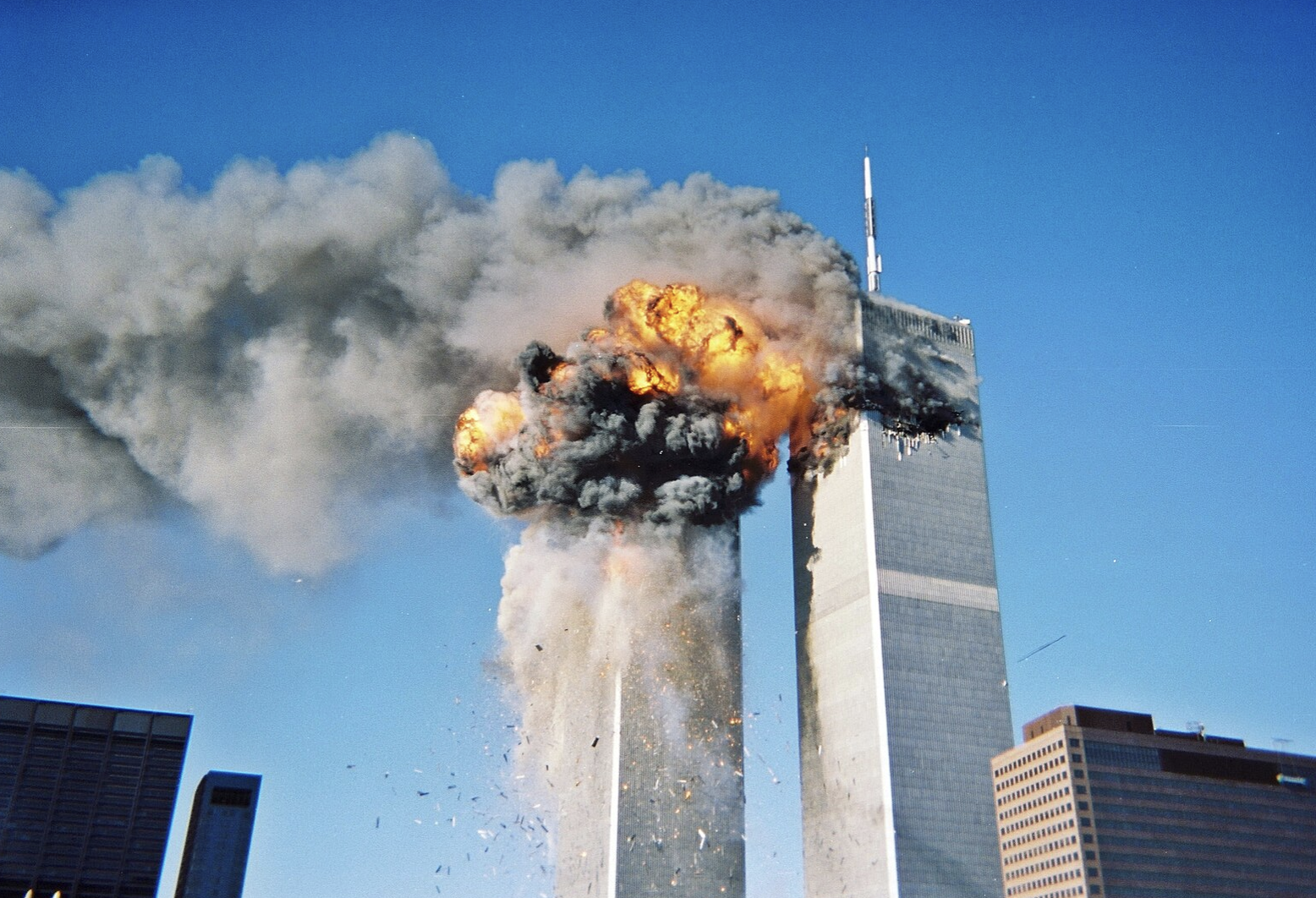
As Bush recalls of the “old New York,” “I lived in New York—I was in school in Texas—but I lived in New York for the summer,” adding, “It was so fun.” “Was it so magical?” Davis nudges. “It was so magical… That New York was so fun” (the repetition of the word “fun” now starting to sound like a euphemism for some very tabloid fodder-y goings-on). “What year was that?” “That was like two thousand…no, yeah! Two thousand…one.” The hesitation in Bush’s voice doesn’t seem like a matter of being unsure of the timeline, but rather, suddenly questioning if she can say that 2001 was fun in New York. Davis responds, “Wow.” Suddenly questioning her choice, Bush asks, “I mean, is that too late? Am I…?” Davis assures, “No, that was a glorious summer. That summer was, like, such the epitome…” Which is perhaps why it had to be the last summer ever before the old New York was quite literally decimated. And, in the aftermath, Jenna’s father, George “Dubya” Bush, famously handled it with all the deftness and diplomacy of a bull in a china shop.
But that didn’t matter, because 9/11 was the “hail Mary” his presidency needed to recover from being branded as a lame duck and, accordingly, becoming a one-term president (though he wasn’t even supposed to have a single term seeing as how Al Gore won the election). At the time that Bush officially took office—as well as during the summer of 2001—Jenna would have been nineteen years old (as was her fraternal twin, Barbara). Not exactly made to suffer through an awkward adolescence the way her predecessor of a First Daughter, Chelsea Clinton, was, but still “treated differently” (though, again, perhaps not nearly as scrutinized as Clinton—minus the media coverage of her brushes with getting caught for underage drinking). And that undoubtedly means that while in New York, the red carpet was rolled out for her. Maybe the same way it was for Samantha Jones if she was running the PR for something.
In any event, during the summer of 2001, “Carrie fever” (as Jay-Z would call it on ‘02’s “‘03 Bonnie and Clyde”) reached a crescendo as the fourth season began to air in June (with a second part, consisting of six episodes, airing in the aftermath of 9/11 from January 6-February 10, 2002). So it’s no wonder that Davis would bill the summer of ‘01 as the “epitome” of New York. Or the New York that can now be described as “old” (even though, for most Gen Zers, even 2010s-era New York is considered “old”). Ottessa Moshfegh would likely classify it as the epitome as well, in terms of everything coming to a catastrophic head vis-à-vis privileged, bubble-living New Yorkers (and beyond) assuming everything was just hunky-dory.
To get across this message in her 2018 book, My Year of Rest and Relaxation, Moshfegh contrasts the interests of the nameless narrator (a “hot blonde” with an inheritance to accommodate her year of rest and relaxation) and her former college roommate/“best friend,” Reva. It is Reva who insists that the narrator ought to get more engaged with current pop culture trends/entertainment, such as Sex and the City, with which, like most other women of the time, Reva is “obsessed.” The narrator, instead, prefers more “out of touch” media. Mostly Whoopi Goldberg movies (e.g., Fatal Beauty) on her much-used VHS player (because, lest anyone forget, DVD dominance hadn’t fully taken hold in 2000, when most of the novel takes place—in fact, it was in 2001 that the sale of DVD players outpaced VCRs). The narrator essentially wants to black out on a more literal level (via her “sleeping all the time experiment”) than everyone else has on a metaphorical one. Choosing to ignore all the harbingers of a crumbling empire. Much as Bush and his administration ignoring a very glaring President’s Daily Brief just thirty-six days before 9/11 that warned, “Bin Laden Determined to Strike in the US.” Bush opted to push that brief aside. Just as he seemed to push a lot of other facts aside as well in the years following. It was anything to suit his narrative—one that meant invading Iraq for good measure. Because Afghanistan wasn’t enough. Bush needed to take down the man who, as he put it, “tried to kill my dad.”
As for Jenna, yukking it up in NYC in the summer of 2001, she seems to embody a Reva-like figure. Just wanting to have a good time, be relevant and insist that everything is “idyllic” business as usual (which it mostly always is for rich kids, even in times of extreme crisis). That September 11—the end of an American summer in more ways than one—would be the thing that defined her father’s presidency only adds to the irony of her so greatly enjoying the summer just before it happened. Especially since, in the wake of 9/11, Bush’s “Bushisms” would start to go even harder (therefore, become that much more embarrassing). For example, “Our enemies are innovative and resourceful, and so are we. They never stop thinking about new ways to harm our country and our people, and neither do we” (which now reads like more of a Freudian slip, particularly when applied to the policies of the second Trump era).
The Bushism method seemed to seep into Jenna’s consciousness while talking to Davis. For, when asked about Carrie speaking directly to the camera during the first season of SATC, Jenna replied, “About her breaking the third wall, basically?” It’s a “Bushism” for sure, considering it’s called breaking the fourth wall. Something she did in her own way by talking up that “fun” summer in New York before the fall of the empire and the brief rise of her father’s political stock.


