


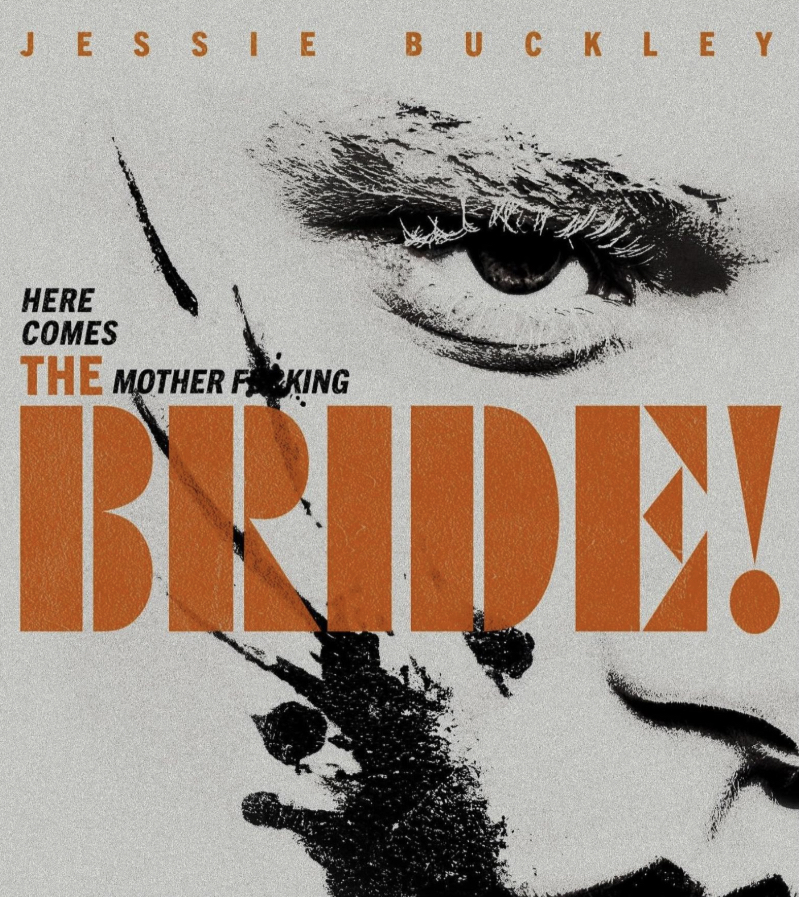
From the moment The Bride! landed in theaters, it was branded as “dead on arrival” (yes, a “cute” phrase aimed at the Frankenstein element of it). A failure, a flop, tout ça. This because it made roughly seven million dollars during its opening weekend in the U.S.—with an additional six-ish million from overseas receipts putting the total at about thirteen million dollars. The domestic seven million placed The Bride! at number three in the U.S. top ten, following Hoppers and Scream 7.
But still, landing in the top three wasn’t enough to deem the film a “success.” Since, as anyone working in the movie industry knows, success is measured exclusively in financial gains. And while millions of dollars might sound like a lot to anyone living on the average wage, it was still not enough to be “impressive” to the studio that took a chance on The Bride!: Warner Bros. Worse still, it fell seventy-two million dollars short of recouping its budget that first weekend.
Nonetheless, Maggie Gyllenhaal, who wrote and directed, forged ahead on her press tour for the film, appearing on Late Night with Seth Meyers for the March 9th episode, meaning right after the weekend that revealed her film to be a “flop.” Perhaps that’s why Gyllenhaal was keen to emphasize to “the Meyers audience” the importance of seeing this movie in a theater, underscoring that its visual sumptuousness was designed for the big-screen experience in a way that her writing and directing debut, The Lost Daughter (also starring Jessie Buckley), was not. Or at least, that’s how she’s billing it since The Lost Daughter was distributed by Netflix (the erstwhile frontrunner for “absorbing” Warner Bros. before Paramount Skydance swooped in again).
What Gyllenhaal couldn’t say, apart from giving it the old college try about trying to sell people on the magic of the “cinema experience,” is how fucked it is to set a movie like hers up to fail based on the amount of money it makes. Which is part of the reason why someone like Timothée Chalamet is cavalier and unthinking enough to say, “I don’t wanna be working in ballet or opera or, you know, things where it’s like, ‘Keep this thing alive even though, like, no one cares about it.’ All respect to the ballet and opera people out there, uh, I just lost fourteen cents in viewership.”
That one-two punch of saying “all respect” followed by the disrespect of likening what those arts mean only in terms of money. Not in terms of what they still mean to so many people. What does it matter the “amount” of those people? So long as there’s an audience, there’s an audience, regardless of its size. This is the kind of thinking that should be applied to The Bride! Or even another movie that it’s, on the surface, comparable to: Joker: Folie à Deux. Comparable not just because of the “two against the world” motif, but because they’re both extremely “non-studio” movies that managed to push their way through the studio system. Almost as if by sheer “trickery.” In The Bride!’s case, perhaps the promise of an all-star cast and a story with a theoretically built-in audience (for Frankenstein is a novel with its own devout fanbase) “bamboozled” Warner Bros. into greenlighting it.
Then again, out of all the studios of late, Warner Bros. is the one to have released some of the most daring choices of the past few years (though that’s likely to change after Paramount Skydance officially takes the reins), including Bones & All (yes, starring Chalamet), Barbie, Saltburn, Challengers, Blink Twice, Mickey 17 and Sinners. And yes, talking of Mickey 17, The Bride! has even managed to outdo that particular film with regard to a disappointing return on investment for Warner Bros.
Yet therein lies the fundamental issue with how movies are made and assessed: the fact that it’s all about a return on investment a.k.a. money (where, once upon a time, a studio like MGM went so far as to suggest that art in and of itself was the real pursuit behind filmmaking by featuring “ars gratia artis” [“art for art’s sake”] as the motto associated with its logo). Further evidence that film is still viewed as a highly bankable medium, despite the ongoing discourse about how it’s dying. Because of that ultra-capitalistic side of it, again, it’s no wonder that Chalamet would say something so gross and out of touch with, let’s say, “salt of the earth” artists who could never imagine not engaging with their medium of choice, regardless of monetary gain or “audience size.” Because the truth is, there are so many artists out there doing it purely for love of their art. And that, in spite of being “studio movie,” is exactly how Gyllenhaal’s film comes across.
Even so, Gyllenhaal has been in the business long enough to know that it’s still up to her to “keep her baby alive” for as long as possible (the irony being that it’s a “baby” focused on a dead woman). So it is that she’s tried to entice the average person to go see it on the various talk shows she’s appeared on to promote it. For example, on The Drew Barrymore Show, Gyllenhaal did her best to distill the theme of The Bride! as follows: “This movie is about the parts of all of us that will not get in the box that everyone tells us we’re supposed to get into.” Much like The Bride! itself, which Gyllenhaal assessed as being “post-genre” because of its many genres all rolled into one. Then, as if to further attempt to make people understand it, she also added on Late Night with Seth Meyers, “My movie is…it’s new. It’s different, it’s in a different language. You have to kind of learn the language of it.”
Her mistake here being to assume that the average audience member—you know, like the average voter—in America has any capacity for that kind of patience or aptitude. Especially since the average American can barely speak their own language, let alone make space in their little minds to try understanding another one, filmic or otherwise.
But one thing everyone should understand is this: calling The Bride!—or any film released in theaters—a failure from the outset only continues to fan the flames of the narrative being told about the movie: that it’s “not good,” therefore not worth seeing at all to make up one’s own mind about it. At the same time, maybe this is one movie that many people don’t deserve to make their own minds up about. Because their brains are technically deader than Frankenstein’s—and now, The Bride’s.


+ There are no comments
Add yours