


Having long ago established that she finds the remix version of a song just as important as “the real deal,” Madonna has a rich history of working with a combination of both up-and-coming and distinguished DJs, with everyone from Junior Vasquez to Felix da Housecat to Peter Rauhofer (RIP) to Avicii (RIP part deux) to Tracy Young working to recreate Madonna’s singles into something entirely different, yet also still plenty “dance-worthy.” And so, the latest addition to her “stable of esteemed DJs that have worked on her remixes” is Peggy Gou, the South Korean multi-hyphenate who also has her own record label.
And yes, it’s about time Madonna looked to another woman to perform this delicate task. But, to be fair, it’s not exactly easy to find a female DJ or producer in the music industry, though Addison Rae’s debut, Addison (ultimately an homage to Ray of Light), was a breath of fresh air on that front thanks to co-production from Elvira Anderfjärd (a.k.a. ELVIRA) and Luka Kloser. As is Peggy Gou’s “Energy Remix” of “I Feel So Free.” Indeed, it’s got energy in spades. Specifically of a very 80s variety, which is no doubt both women’s intent, considering how Madonna is traveling back to that era in many regards yet again. The one that shaped her, that “raised” her. For, like many who can be quite cornball about New York, Madonna is one of those people who doesn’t really feel that she was “born” until she moved to NYC, arriving there at one of the headiest times in its history: the late 70s. And then going on to enjoy the heyday of the downtown art (and music) scene of the early 80s. Hence, her close friendships with people like Keith Haring. Not to mention her romances with people like Jean-Michel Basquiat.
It is this scene and era that Gou seems to have had in mind with the backbeat she’s conjured for the “Energy Remix,” which is awash in the sound of Dead or Alive’s signature 1985 hit, “You Spin Me Round (Like a Record),” along with occasional hints of something decidedly New Order-esque (though not necessarily “Blue Monday”). There’s even a touch of Bronski Beat’s “Smalltown Boy” in there if you really “squint,” so to speak, to listen. Subtly referencing this 1984 anthem for misunderstood gay boys who (rightly) felt they had no other choice but to run away from home and flee to the big city in order to find anyone even remotely “like-minded” would be in keeping with what Madonna herself not only represents to gay men (particularly those “of a certain age”), but also what she experienced in her own way upon fleeing Michigan in favor of NYC (ergo, further evidence of her insistence that she’s a gay man trapped in a woman’s body).
As for the other 80s influences that transform this into a tincture of vague familiarity, it’s an overall sonic decision that makes plenty of sense considering that Confessions on a Dance Floor (now a.k.a. Confessions I) was also Madonna’s bid to get back to her early 80s dance roots (even if most of the songs on the record were decidedly rooted in disco—but then, disco was still a holdover genre in the early 80s as the hangover of the 70s struggled to subside).
In fact, Madonna’s “return to the dance floor” as it was called in 2005, arrived conveniently after 2003’s American Life was deemed a “flop” (despite being a number one album that sold millions of copies—thus, putting it on a level with Erotica in terms of Madonna’s underrated, unfairly maligned albums category). So it was that Madonna essentially “started all over again,” pivoting away from working entirely with Mirwais Ahmadzaï for the third time in a row and tapping Stuart Price for most of the production.
The pattern of Madonna pivoting away with Ahmadzaï yet again after a “less successful” album (though, again, it was number one on the Billboard 200) like 2019’s Madame X remains alive and well with Confessions II. And with it, the same pattern of Madonna claiming a “return to her roots.” Which, in truth, she’s never really strayed from. For dance music has always been a staple of all her records. And even on those rare occasions when it wasn’t (like, say, with Bedtime Stories), she always found a way to make a track danceable by enlisting the right remixer.
Luckily for Gou, “I Feel So Free” was already a dance floor anthem to begin with. It just so happened that she was capable of transforming it into a sound more serviceable for the Danceteria dance floor. Which is also a pointed choice when taking into account not only Madonna’s well-known association with that club during its heyday, but also that track five on Confessions II is named after said club. So it is that Gou took it upon herself to work up a remix that not only makes “club kids” want to dance up even more of a storm, but also makes it quite easy to imagine this playing over the Desperately Seeking Susan scene of Madonna getting into the groove inside Danceteria in lieu of, well, “Into the Groove.”
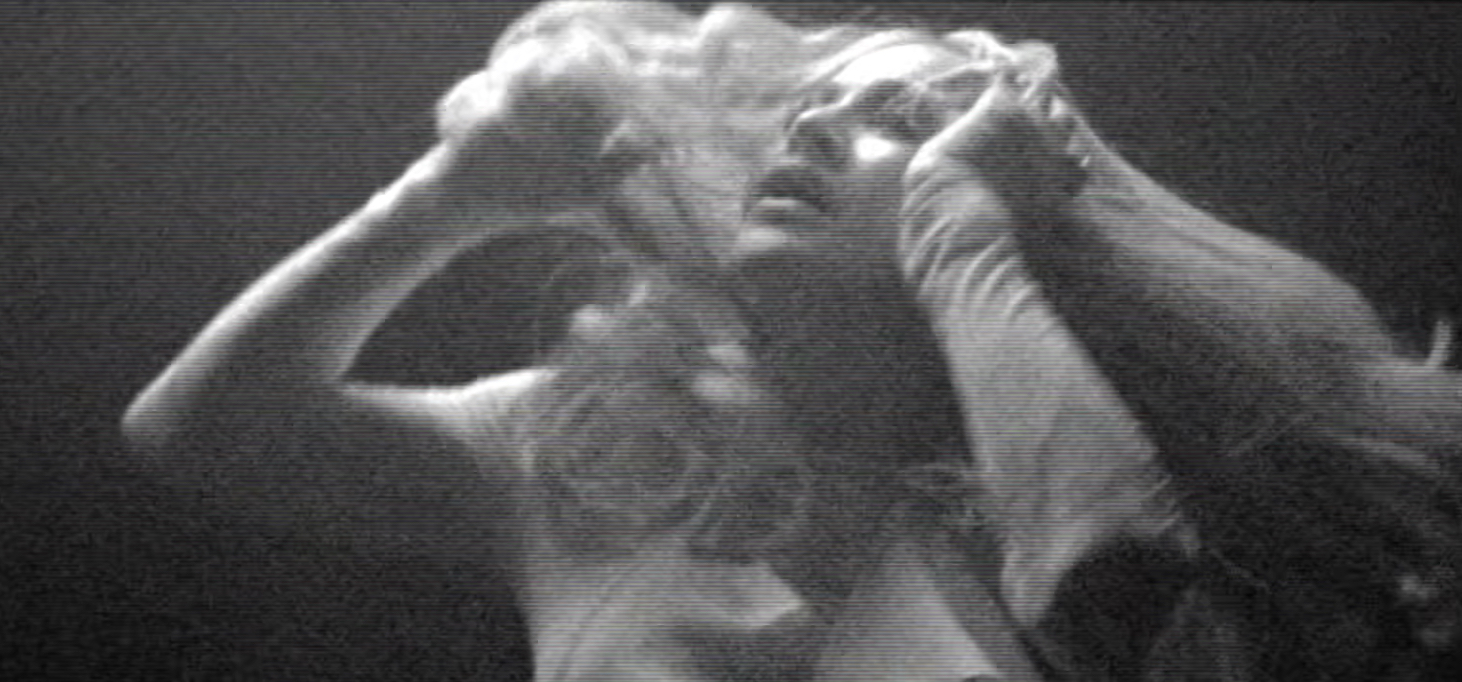
Instead of repurposing that iconic cinema moment, however, Madonna offers a black-and-white “visualizer” to go with the remix that features her going ethereally apeshit on the floor, with additional scenes pulled from one of Gou’s DJing gigs. Thus, intermixed snapshots of bodies up against each other moving to the beat in sweaty, devil-may-care time.
While there’s no adjustment to the original lyrics, there is one aphorism Gou extracts from a different song on the record to place at the end of her remix. A quote that speaks to Madonna’s penchant for blending high and low art in such a way as to make her the reigning queen of postmodernism in pop culture. Take, for example, how on 1990’s “Now I’m Following You (Part II),” Madonna managed to incorporate Socrates’ adage, “The unexamined life is not worth living” into her lyrics by simply saying to “Dick,” “An unexamined life is not worth living.”
So it’s no shock that she should manage to bring Albert Camus into her remix with the first part of his quote, “Everything begins with consciousness…” (the complete version of it being, “For everything begins with consciousness and nothing is worth anything except through it”). While the line might actually be pulled from a different track on her record, it’s apropos that Gou should “tack it on” at the end here. Because there’s no denying that Madonna didn’t feel her own consciousness truly began until she stepped onto a club’s dance floor. First in Michigan with her gay mentor, Christopher Flynn, and then in New York, as she made her way through some of the most illustrious milieus of the decade (that have remained legendary, therefore laden with nostalgia, to this day). This remix is an unbridled love letter to those “watering holes” where Madonna came up as both an artist and “fully-formed” person.


